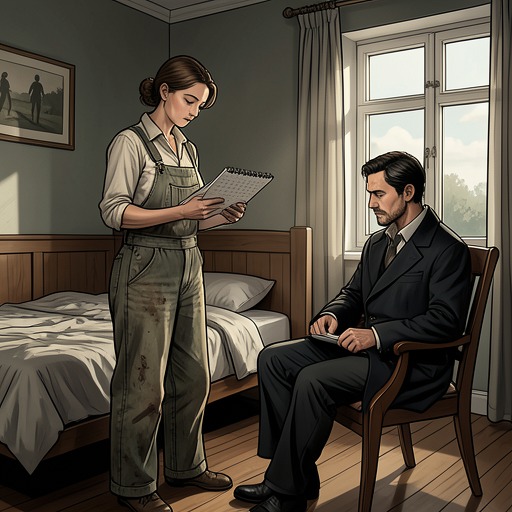
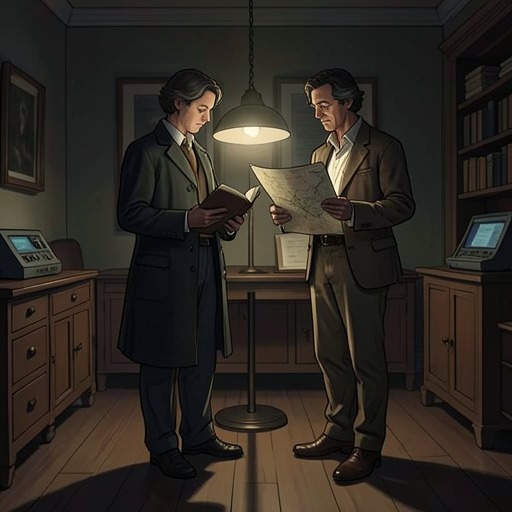
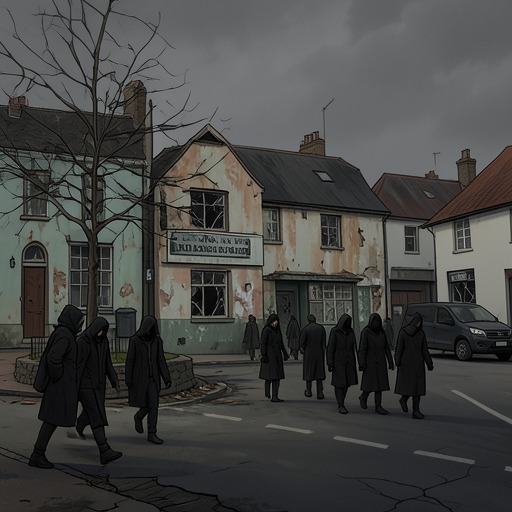
Event 1
Tommy’s “elephant painting” and prolonged exclusion
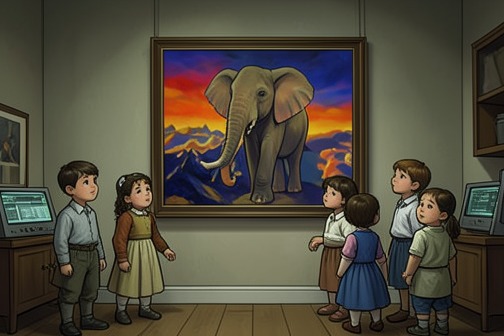
[Tommy’s “elephant painting” and prolonged exclusion](entity:event-recall-event-972cef2ca355) mark the point at which a small, ambiguous classroom joke became the occasion for years of ridicule. In [Kathy](entity:character-recall-character-kathy-cb914b1b0058)’s retrospective account, [Tommy](entity:character-recall-character-tommy-6e67d140947b)’s picture does not explain his isolation on its own: the decisive turn comes when a guardian’s kindness makes his perceived artistic inadequacy visible to his classmates, and the teasing that follows spreads far beyond the art room. The episode reveals how a moment that seems trivial to its participants can harden into a durable social identity, especially when a target’s attempts to defend himself feed the group’s attention.
## Background and the elephant painting
Tommy later traced the beginning of his troubles to an afternoon art class taught by [Miss Geraldine](entity:character-recall-character-miss-geraldine-aad014edb4c9). Until then, he had enjoyed painting, although Kathy suspects he already felt that his work was not keeping pace with that of the other students. He painted an elephant standing in tall grass in a style Kathy describes as more like the work of a child three years younger. The watercolour took no more than twenty minutes. Tommy said he had made it as a joke, but Kathy doubted there was a clear, considered reason behind it: at that age, she suggests, a student might make something simply to get a laugh or provoke a reaction, and only afterwards struggle to explain the impulse.
The picture did get a laugh, but not the response Tommy had expected. Kathy sees an irony in the fact that this particular lesson was led by Miss Geraldine, one of the students’ favourite guardians. She was gentle and attentive, and even after reprimanding a student tended to offer extra kindness. Had Mr. Robert or [Miss Emily](entity:character-recall-character-miss-emily-50ca2bb99504) taught the class, Tommy might have received a mild telling-off and been dismissed as a poor joker. Miss Geraldine instead tried to protect him from ridicule by finding qualities in the picture to praise and pointing them out to the class. Her well-meant intervention drew attention to the very work that made Tommy vulnerable. Resentment began when classmates saw that she was treating the elephant as worthy of serious approval.
## From public embarrassment to sustained exclusion
After the class, Tommy heard other students talking about him without bothering to ensure that he could not hear. Kathy’s account places the elephant at the point where a private insecurity became public knowledge. Before it, Tommy may have been disguising his sense that his painting was immature by deliberately producing childish work. Afterwards, classmates watched to see what he would do next. For a time, he tried harder; but whenever he began something, sneers and giggles followed. The harder he tried, the more laughable his efforts seemed to become in the eyes of the other students. He eventually returned to deliberately childish pictures, using apparent indifference as a defence against judgment.
The exclusion did not remain confined to art lessons, even though art was a frequent part of life in the Juniors. Tommy was left out of games, boys refused to sit beside him at dinner, and students sometimes acted as if they had not heard him speak in the dorm after lights-out. The pattern was not uninterrupted at first. Months could pass without an incident, allowing Tommy to think the trouble had ended; then something he did, or an act by one of his enemies, including Arthur H., would set it going again. These pauses made the hostility harder to read as a single, finished episode. It repeatedly returned, turning the humiliation of one class into an ongoing condition of social life.
## Temper, escalation, and the limits of the group’s account
The duration of Tommy’s mistreatment complicates the familiar explanation that he brought his problems on himself. [Ruth](entity:character-recall-character-ruth-5948dc08d1c1)’s later account of him as responsible for his own difficulties reflects what many students at [Hailsham](entity:location-recall-location-hailsham-24972e3ee84f) believed. But remembering what Ruth said prompts Kathy to recognize that the idea that Tommy was deliberately not trying had circulated since the Juniors. Kathy realizes that the trouble had lasted years, not merely weeks or months. Tommy’s account of its beginnings supports that revised understanding: his later behaviour developed within an established pattern of watching, mockery, and exclusion.
The temper tantrums became a crucial part of the escalation, but their timing is disputed even in Kathy’s recollection. She remembers Tommy as having a temper from the Infants onward; Tommy told her the tantrums began only after the teasing became bad. Kathy does not settle the disagreement. Instead, she emphasizes their consequence: the outbursts gave the other students more reason to focus on him and helped intensify the persecution. By the summer of Senior 2, when he was thirteen, it had reached its peak. His reactions may have been conspicuous, but the account does not treat them as the original cause of the group’s hostility; they became another mechanism through which that hostility fed itself.
## A gradual easing and the episode’s significance
The harassment faded not all at once but through a change in Tommy’s responses. For a period that may have lasted a month or longer, pranks continued fairly steadily, yet he did not lose his temper. Sometimes he seemed close to doing so; at other times he shrugged quietly or behaved as if he had not noticed. At first, his tormentors seemed disappointed, as though he had failed to provide the reaction they expected. Then the pranks became half-hearted, and eventually Kathy noticed that more than a week had passed without one. The sequence suggests a fragile shift in the group’s attention, not a sudden resolution or a demonstrated reconciliation.
The episode’s wider resonance lies in the difference between being treated as an individual and being seen through a hostile category. Years later, when a group of Hailsham students deliberately approached [Madame](entity:character-recall-character-madame-e4b986404c22) to test whether she feared them, her visible dread left them feeling, in Kathy’s retrospective image, like spiders. At their later meeting, Miss Emily acknowledges that she too had felt revulsion towards the students, while insisting that she fought those feelings and acted on their behalf. These encounters do not equate the students’ adult stigma with Tommy’s childhood bullying, but they make the pattern legible: gestures of apparent civility and care can coexist with fear, aversion, or exclusion. In Tommy’s classroom, even Miss Geraldine’s protective kindness could not prevent the class from turning his vulnerability into a spectacle. The elephant painting matters less as an explanation of Tommy than as the small occasion through which a long-standing insecurity became visible, socially enforceable, and difficult to escape.
Event 2
Students test and confirm that Madame fears them
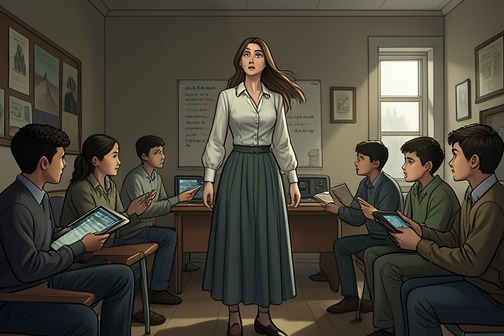
The students’ test of [Madame](entity:character-recall-character-madame-e4b986404c22) turns a private childhood theory into a painful recognition of their place in the world. At [Hailsham](entity:location-recall-location-hailsham-24972e3ee84f), six students deliberately approach the visiting collector to see whether she is afraid of them. Her restrained but unmistakable recoil confirms [Ruth](entity:character-recall-character-ruth-5948dc08d1c1)’s suspicion; more importantly, it makes the students feel the difference between themselves and the people beyond their sheltered school as something visible in another person’s eyes.
## Background: Madame and [The Gallery](entity:concept-recall-concept-the-gallery-5f6f3e9db14f)
Madame came to Hailsham usually twice a year, sometimes three or four times, to select work from the students. Her visits mattered because the children’s paintings, sketches, pottery, essays, and poems were gathered for her consideration, although The Gallery itself remained hazy to them. They did not discuss it with the [Hailsham guardians](entity:character-recall-character-a7a1c9c4f55e). Looking back, [Kathy H.](entity:character-recall-character-kathy-h-54954f6c29c4) understands that this silence was partly a rule the students had imposed on themselves, not merely an order from adults. The institution’s importance was thus felt before the children could clearly explain what it meant.
To the students, Madame was sharply distinct from the other adults who came to the school. Tall and narrow, with short hair and a sharp grey suit, she kept her distance and did not talk to them. The children had called her snooty, reading her reserve as a familiar kind of adult coldness. When Ruth, around the age of eight, proposed instead that Madame was scared of them, she supplied a more disturbing explanation for the same behavior. The others challenged her: they could not imagine what Madame had to fear from children. Ruth could not specify a danger either, but insisted that her impression was right.
The disagreement persisted over several days. Rather than settling it through argument, the group devised a practical test: the next time Madame visited, the six would suddenly emerge around her, remain polite, and watch her reaction. The plan was mischievous in form, a shared dare meant to verify Ruth’s hunch. Its simplicity concealed a question the children had not yet considered: what it would mean to discover that an adult regarded them with fear.
## The Test in the Courtyard
Madame’s arrival was not announced, but the preparations made it possible to anticipate it. In the weeks before a visit, the Hailsham guardians sorted the students’ work, eventually placing four or five pieces from each junior and senior year in the billiards room. The room was closed, and students watched the display grow through its windows from the terrace wall. Once the work had been arranged on tables and easels like a miniature [Exchanges](entity:concept-recall-concept-exchanges-715ff3a95a20), Madame was expected within a day or two. On this visit the six needed to know the precise moment, since she might remain at Hailsham for only an hour or two, so they took turns keeping watch.
The school’s position helped them. Hailsham lay in a hollow, with fields rising around it, and its windows offered a view of the narrow road descending to the main gate. Vehicles were uncommon enough that a car could unsettle a lesson. When Madame’s car appeared, the students were in Mr. Frank’s spelling class in a first-floor room at the front of the house. Their sudden restlessness confused him. As the class ended, they saw Madame park in the courtyard below and hurriedly agreed on what to do.
They followed the other students downstairs and waited just inside the main doorway. Madame remained in her car, searching through her briefcase, before emerging in her familiar grey suit with the case held tightly in both arms. At Ruth’s signal, the six sauntered out toward her as if in a dream. When she stopped stiffly, each student murmured an apology and moved away. They did not threaten or touch her; the test depended on their unexpected closeness and on the response it might provoke.
## Confirmation and Immediate Aftermath
Madame did not cry out or gasp. She simply froze and waited for them to pass. But the children were watching her closely, and Kathy H. remembers seeing a shudder she seemed to suppress and dread that one of them might brush against her. The restraint of the reaction made it no less legible. Ruth had been right: Madame was afraid of them, and the students understood that her fear resembled the fear someone might feel toward spiders.
The discovery changed the mood before the group had even crossed the courtyard. Their anticipation had been light-hearted, private, and partly playful; now they felt as though they had walked out of sunshine into chilly shade. Hannah looked close to tears, and even Ruth was shaken. [Laura](entity:character-recall-character-laura-e8b3bd8aefc4) asked why Madame wanted their work if she disliked them, and why she did not leave them alone. No one answered. The students continued toward the pavilion in silence, carrying a question their simple prank had opened but could not resolve.
The contradiction at the center of the scene is concrete: Madame comes to choose the students’ creative work, yet recoils from the children who made it. The Gallery offers them attention as makers while Madame’s bodily response marks them as objects of dread. Her visit therefore does not give them a clear explanation of their status; instead, the children encounter its social meaning through a gesture of avoidance. What they had treated as an abstract suspicion becomes something they can see and feel in another person’s reaction.
## Retrospective Significance
Kathy H. recalls the episode as a moment when the students knew that they were different from the Hailsham guardians and from people outside the school, but did not yet understand what that difference entailed. The adults had given talks, shown videos, and held discussions, and the children had received warnings. Yet such preparation could not reproduce the force of seeing an outsider shudder at the thought of coming into contact with them. Their sheltered surroundings made the contrast especially sharp: gardeners and delivery men could joke with them and call them sweethearts, while Madame’s response disclosed another way they might be regarded.
The memory’s force comes from the delay between being told and truly understanding. Kathy H. reflects that some part of a child may already be waiting for the moment when an indistinct unease becomes knowledge, even before the child can name what is coming. In this courtyard, the students briefly see themselves through Madame’s eyes. [Kathy](entity:character-recall-character-kathy-cb914b1b0058) compares the recognition to passing a familiar mirror that suddenly shows something troubling and strange. The image shifts the scene from a test of one woman’s behavior into a formative encounter with exclusion: the students discover not simply that Madame fears them, but that they can be seen as fundamentally other while still being sheltered, addressed kindly, and valued for what they create.
Event 3
Tokens controversy
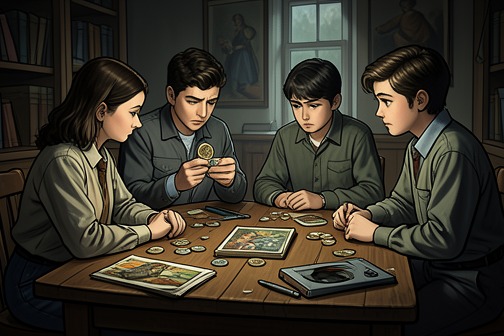
The [Tokens controversy](entity:event-recall-event-911fd174c8ce) was a dispute among the students at [Hailsham](entity:location-recall-location-hailsham-24972e3ee84f) over whether they should receive [Exchange Tokens](entity:concept-recall-concept-exchange-tokens-b73fb8ec9cd5) when [Madame](entity:character-recall-character-madame-e4b986404c22) took their work. What began as an argument about the value of art and possessions became a charged encounter with a question the students had learned not to ask: why Madame collected their creations at all. The controversy ended without resolving that deeper mystery, but [Miss Lucy](entity:character-recall-character-miss-lucy-f91328e8593e)’s restrained answer stayed with [Kathy H.](entity:character-recall-character-kathy-h-54954f6c29c4) and helped her recognize that the students were being kept from important knowledge.
## The Exchange system and the value of possessions
The controversy grew out of the [Exchanges](entity:concept-recall-concept-exchanges-715ff3a95a20), held four times a year, in which students displayed paintings, drawings, pottery, and sculptures made during the preceding months. The guardians assigned tokens to submitted works, and students used those tokens to buy creations made by others in their own year. This was not simply a way to recognize artistic achievement: apart from the separate [Sales](entity:concept-recall-concept-sales-d6ac12a7b7ba), the Exchanges were the students’ principal means of acquiring personal possessions made by fellow students. A work might become a treasured object to keep beside a bed, carry in a bag, or place on a desk.
By about the age of ten, the students had become more alert to the market value of what they made. Their attention had shifted from regarding selection for the billiards room, or removal by Madame, as an unqualified triumph to thinking about T-shirts, decorated beds, personalized desks, and the collections they kept in wooden chests under their beds. They carefully displayed some possessions and put others away. The value of a creation therefore divided in two: being selected by Madame could confer distinction, but the student also lost an object that might otherwise have become a personal treasure.
## The dispute over compensation
Against that background, mainly boys began arguing that students should receive tokens when Madame took their work. Many agreed; others found the proposal offensive, apparently because it reduced a highly distinguished honour to a transaction. The disagreement continued for some time. Roy J., a student a year above Kathy H. whose work had been taken several times, eventually went to see [Miss Emily](entity:character-recall-character-miss-emily-50ca2bb99504), the head guardian, to press the issue.
Approaching Miss Emily without being summoned, and doing so with demands, seemed to the students an almost reckless step. They expected Roy to be severely reprimanded. Instead, reports circulated in the following days that the guardians were discussing, and even arguing about, the question. The eventual ruling granted tokens, but only a few: the guardians maintained that having one’s work chosen by Madame was a “most distinguished honour.” The compromise satisfied neither side, and the arguments continued. Rather than settling the matter, the decision made the contradiction explicit: the students’ work was both theirs to value and something whose removal the institution framed as a privilege.
## Polly’s question and Miss Lucy’s answer
The controversy reached a more unsettling turn in a lesson in the library. The students were seated around a large oak table, with a log burning in the fireplace, for a play-reading. After a line prompted [Laura](entity:character-recall-character-laura-e8b3bd8aefc4) to make a joke about the token dispute, the class laughed, including Miss Lucy. She then set aside the play and invited the students to discuss the issue that had been occupying them. During that conversation, Polly T. abruptly asked why Madame took their things.
The room fell silent. Kathy H. recalls feeling both angry at Polly for breaking an unwritten rule and eager to hear Miss Lucy’s answer; the other students, too, first reacted with disapproval and then turned expectantly toward the guardian. Miss Lucy was not angry. After a pause, she said that the taking happened for a good and important reason, but that the students would not understand an explanation then; she hoped it would be explained one day. The answer acknowledged a purpose without revealing it. The students did not press her. Embarrassment made them eager to return to the safer argument over tokens, even as the unanswered question continued to trouble Kathy H.
## What the controversy left unresolved
Kathy H. later placed the controversy in Junior 4, when the students were ten, although she and [Tommy](entity:character-recall-character-tommy-6e67d140947b) initially disagreed about its timing when they remembered it years afterward. She thought it had occurred some time after the students’ encounter with Madame and about three years before her conversation with Tommy by the pond. That retrospective uncertainty accompanies a clearer memory of the lesson’s emotional pattern: a question crosses a boundary, the class briefly confronts what it does not know, and ordinary discussion resumes without supplying an explanation.
The episode became one of the earlier clues that Hailsham’s accounts of its practices were incomplete. Kathy H. connected Miss Lucy’s words in the library with a later conversation in which Tommy told her that Miss Lucy thought the students were not being taught enough. The controversy itself did not explain the Gallery or disclose why Madame took the work; it left those matters opaque while making the silence around them perceptible.
The later explanation gives the dispute a further significance. Miss Emily tells Kathy H. and Tommy that Hailsham collected and exhibited student art as part of a campaign to demonstrate that students raised in humane, cultivated surroundings could be as sensitive and intelligent as ordinary people. The collection was thus more than an honour bestowed on individual makers: their creations were used to make a public case for the students’ humanity. Against that background, the tokens argument registers the students’ limited but real claim to their own work. They could cherish, trade, and give possessions to one another, yet the purpose for which their art was taken remained beyond their reach.
Event 4
Ruth’s pencil case and Kathy’s confrontation
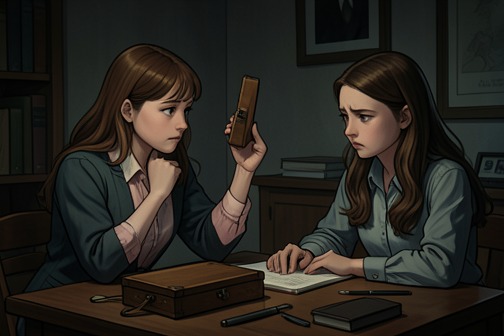
[Ruth’s pencil case and Kathy’s confrontation](entity:event-recall-event-2628971c9f70) is a remembered [Hailsham](entity:location-recall-location-hailsham-24972e3ee84f) episode in which a small possession becomes the focus of rivalry, shame, and repair. [Ruth](entity:character-recall-character-ruth-5948dc08d1c1) presents the case in a way that invites others to believe it came from [Miss Geraldine](entity:character-recall-character-miss-geraldine-aad014edb4c9), while [Kathy](entity:character-recall-character-kathy-cb914b1b0058)’s effort to test that claim turns their unspoken competition into a private injury. The object matters not only as a coveted possession, but as a token of the special attention Ruth hopes others will imagine she has received.
## Background: possessions and status at Hailsham
The incident unfolds within the economy of the [Exchanges](entity:concept-recall-concept-exchanges-715ff3a95a20), held four times a year at Hailsham. Students contributed paintings, drawings, pottery, and other creations; the guardians awarded [Exchange Tokens](entity:concept-recall-concept-exchange-tokens-b73fb8ec9cd5) for their work, which students then spent on pieces made by classmates in their own year. Alongside the [Sales](entity:concept-recall-concept-sales-d6ac12a7b7ba), the Exchanges were a principal way to acquire personal belongings. Students kept their purchases in named wooden chests under their beds, and many took care to arrange and display their collections.
These systems made possessions socially charged. As students grew older, they became more attentive to the value of their work and to personalizing their beds and desks. Having something selected by [Madame](entity:character-recall-character-madame-e4b986404c22) had once seemed an unquestioned honor, but by about age ten that pride had become complicated by the thought that the most marketable work was being taken away. In this setting, a pencil case could signify more than practical use: it might suggest access to a desirable Sale item, or a guardian’s exceptional favor.
## The pencil case and Kathy’s suspicion
The confrontation begins in crowded Room 5 on a winter morning. The small room is stuffy, its windows steamed by the radiators, and students are squeezed around a desk where Ruth is sitting. Kathy notices a polished-looking, deep tan pencil case patterned with red circles, its zip fitted with a furry pom-pom. Ruth moves it out of Kathy’s way, but not before Kathy has seen it and asked whether it came from a Sale. Several nearby girls turn to admire it.
Ruth pauses to check the faces around her before saying that they should agree she got it at the Sale, then gives them a knowing smile. Kathy understands the implication: Ruth is suggesting that Miss Geraldine gave it to her. It is not an explicit claim, which makes it difficult to challenge. For weeks, Ruth has used a particular smile, a lowered voice, or a stage-whisper gesture to hint at small favors: permission to play a music tape in the billiards room before four on a weekday, or a conversation with Miss Geraldine during a walk when the rest of the group had been told to keep quiet. Guardians were not supposed to show favoritism, though limited displays of affection did occur, leaving Kathy uncertain whether Ruth’s hints were true.
Kathy is especially stung because a gift from a guardian seems to her to exceed even the informal boundaries of favor she has observed. She glares at Ruth, who responds with a hurried warning and another smile; the arrival of the guardian ends the moment before Kathy can answer. Afterwards, Kathy becomes distracted for days, imagining how she might expose Ruth and make her admit she had invented the story.
## The bluff and its cost
Kathy reasons that the pencil case probably came from a Sale. Ruth might have obtained it from another student, but Kathy considers that unlikely: such an attractive item would have been noticed if it had circulated at Hailsham. Ruth could also have reserved it with a monitor before a Sale opened, making it less likely that others had seen it. Sales registers recorded what was bought and who bought it, so Kathy considers checking one. She eventually decides that she need not carry out the whole plan; if her guess is right, she can bluff.
On a foggy, drizzly day, the two girls take shelter under the eaves of the main house. As students hurry in from the rain, Kathy tells Ruth she had been looking through the register at the previous Tuesday’s Sale. Ruth quickly asks why she was looking at it. Kathy says she had been talking with a monitor and turning the pages, then adds that the register shows what people have bought. Kathy is looking out at the rain when she sees Ruth turn away, upset and close to tears.
The sight changes the meaning of Kathy’s scheme for her. What had seemed like a carefully prepared way to catch Ruth out now feels like a deliberate effort to hurt her closest friend over a harmless fantasy. Kathy recognizes that Ruth had not actually named Miss Geraldine, and that students themselves often dreamed of a guardian bending a rule or giving them a special kindness. Kathy tries to soften what she has said, but the attempted reassurance does not repair the moment. After a further silence, Ruth walks away into the rain.
## A chance to protect Ruth
Kathy struggles with remorse and frustration, unsure how to make amends. She later creates small opportunities for Ruth to be near Miss Geraldine, including slowing down at a classroom door so Ruth can pass beside the guardian. These gestures do not resolve what happened under the eaves, and Kathy fears that the friendship may simply fade.
The opening comes during an art lesson, when Midge innocently asks Ruth where the pencil case came from. Ruth tenses and looks around at the students present. Before Midge or the others can press her, Kathy intervenes, saying that there are good reasons the case’s origin cannot be told and making it sound like a mystery. The group nods along; Midge lets the matter drop. Kathy has not openly discussed the Sales-register confrontation with Ruth, and Ruth cannot openly thank Kathy for stepping in. Still, Ruth’s manner over the following days and weeks makes her gratitude clear, and Kathy notices her looking for an opportunity to do something kind in return.
About a month later, Kathy loses her favorite cassette. Ruth gives her a replacement she has found at the last Sale, Twenty Classic Dance Tunes, which turns out to contain ballroom orchestral music rather than anything like Kathy’s lost recording. Kathy initially recognizes the mismatch, but then realizes Ruth could not have known what kind of music she wanted. She accepts the gesture with happiness and squeezes one of Ruth’s hands in both of hers. The replacement is not valuable to Kathy for its music; it becomes a treasured object because Ruth chose it for her. Long afterward, especially after Ruth is gone, Kathy continues to keep it.
## Significance
The episode sets the regulated exchange of possessions beside the less measurable exchange between friends. At Hailsham, work earns Exchange Tokens, and Sales and Exchanges give students ways to build personal collections. But the pencil case and the later cassette acquire their deepest meaning through implication, attention, and response rather than through their price or usefulness. Ruth’s case becomes a bid for recognition; the replacement tape becomes a keepsake because it records an act of care, despite being musically unsuitable.
The narration also makes the confrontation a story of belated understanding. Kathy recalls the initial scene through the anger and elaborate plan she felt at the time, then revises its meaning when Ruth turns away in tears. The later intervention with Midge does not erase the hurt, but it gives the girls a way to resume caring for one another without directly naming the injury. In that movement from suspicion to regret, and from regret to an unspoken kindness, the pencil case becomes the point around which their friendship is tested and renewed.
Event 5
Kathy loses her cassette and Ruth gives her a replacement
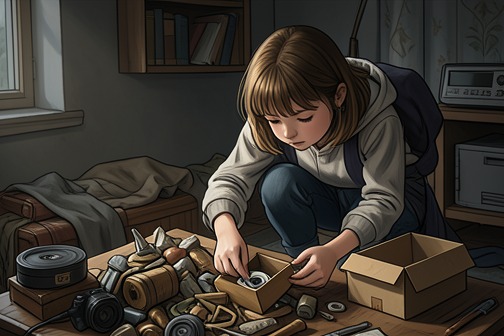
[Kathy H.](entity:character-recall-character-kathy-h-54954f6c29c4)’s lost cassette and [Ruth](entity:character-recall-character-ruth-5948dc08d1c1)’s replacement turn a small incident at [Hailsham](entity:location-recall-location-hailsham-24972e3ee84f) into a revealing account of private attachment, quiet attentiveness, and the difference between an object’s exchange value and what it comes to mean between friends. [Kathy](entity:character-recall-character-kathy-cb914b1b0058) never learns what happened to the original [Judy Bridgewater’s Songs After Dark cassette](entity:object-recall-object-judy-bridgewater-s-son-3ee69b3a2f92). Ruth cannot recover it, but she notices the depth of Kathy’s distress and answers with a gift that outlasts its practical purpose: a different recording, kept as a precious reminder of Ruth after her death.
## The cassette and the Hailsham economy of possessions
The loss occurs in the world of Hailsham’s collections, where possessions are acquired through [Sales](entity:concept-recall-concept-sales-d6ac12a7b7ba) and the seasonal Hailsham student work exchanges. Four times a year, students display work made since the previous exchange, and the guardians award [Exchange Tokens](entity:concept-recall-concept-exchange-tokens-b73fb8ec9cd5) for their contributions. Students then spend those tokens on work made by others in their own year. Paintings, drawings, pottery, and improvised sculptures could all become something another student chose to keep. The exchanges thus provided more than a way to acquire decorations or things to carry between rooms: they made students’ private collections depend on one another’s creativity, and helped shape how students were regarded by their peers.
By the time they were ten, students had grown more acquisitive. A wooden chest under each bed held the things gathered from Sales and exchanges, and many students carefully displayed, stored, and revisited their possessions. That attachment existed alongside a growing sensitivity to the price and desirability of their own work. The tokens controversy arose when students objected to losing work taken by [Madame](entity:character-recall-character-madame-e4b986404c22) without receiving tokens in compensation. This wider tension—between an object as something personally treasured and as something with a marketable value—helps frame the cassette’s disappearance. The recording is not simply missing property: it is an object whose significance Kathy keeps private, even from the friends sharing her dorm.
## The disappearance and Ruth’s quiet attention
Kathy notices the cassette is gone while rummaging through her collection chest in the dorm just before lights-out. When she first understands it is missing, she tries not to reveal how panicked she feels. She hums as she searches, then asks the others casually whether they have seen it. She hopes she may have left it in the billiards room or that someone has borrowed it and will return it in the morning. Neither possibility proves true. The cassette does not turn up the next day, and Kathy never discovers what happened to it.
Looking back, Kathy connects the episode to a more general pattern of theft at Hailsham, which she believes students and guardians alike were reluctant to acknowledge. But the emotional importance of the loss is also bound to a recent moment between the two friends. Less than a month earlier, Midge had questioned Ruth about her pencil case in the Art Room, and Kathy had come to Ruth’s aid. Ruth had since been looking for something kind to do in return. Kathy later wonders whether the disappearance of the cassette gave Ruth a chance to act on that intention, and whether their friendship began to feel normal again after a period of strain.
Ruth’s response is first almost invisible. On the night Kathy asks about the missing tape, Ruth gives a distracted shrug and carries on with what she is doing. The following morning, however, Kathy hears Ruth casually asking Hannah whether she is sure she has not seen it. Ruth has understood both that the cassette matters to Kathy and that Kathy does not want a fuss made about it. Her first effort respects that wish: instead of turning the loss into a public display of sympathy, she searches in the background.
## The replacement at the north hill
About a fortnight later, when Kathy has accepted that the original is truly gone, Ruth finds her during the lunch break. Kathy has been sitting on the grass talking with older girls when Ruth asks her to take a walk. They leave the group, go to the edge of the North Playing Field, and climb the north hill to a wooden fence overlooking the grounds and the scattered groups of students. Kathy remembers the strong breeze at the top, which she had not noticed below. The setting gives Ruth a little privacy for the particular thing she has brought to show her friend.
Ruth holds out a small bag. Kathy can tell that it contains a cassette, and her heart leaps, but Ruth immediately explains that it is not the lost one. She tried to find the original, she says, but it is really gone. Kathy answers with a joke about it having gone to [Norfolk](entity:location-recall-location-norfolk-cb7f812776bb), and they laugh together. The exchange briefly softens the disappointment without pretending the missing tape has been recovered.
The replacement is called *Twenty Classic Dance Tunes*. When Kathy later plays it, she discovers that it contains orchestral music for ballroom dancing, nothing like the Judy Bridgewater recording she had lost. At first, the difference is apparent even before she knows what the music sounds like: she recognizes that Ruth could not have known what kind of recording she would actually want, because Ruth knows very little about music. As that recognition settles in, Kathy’s disappointment ebbs and gives way to happiness. Ruth has not reproduced the lost object or its particular meaning; she has tried to offer something she thought might please Kathy.
Kathy thanks Ruth by squeezing one of her hands between both of hers. She remembers that the students did not often hug one another at Hailsham, so this small gesture registers as an unusual expression of affection. Ruth tells her that she found the tape at the last Sale and thought it was the sort of thing Kathy would like. Kathy agrees, even though the recording is not the music she loved. The gift’s meaning lies in Ruth’s effort and in the care she took to act without making Kathy’s distress into a spectacle.
## What the gift preserves
Kathy still has the replacement cassette, although she rarely plays it because its music has little connection to anything for her. She now understands it less as a recording to be used than as an object, like a brooch or a ring. After Ruth is gone, it becomes one of her most precious possessions. Its continuing importance reverses the usual measure of a collection item: the tape is not valuable because of its music, rarity, or success as a substitute, but because Ruth selected it and placed it in Kathy’s hands.
The episode also gives the friendship a material form. At Hailsham, students acquire possessions through systems that attach tokens and judgments to creative work; here, Ruth’s gift belongs to a different kind of exchange, shaped by attention rather than an assigned price. It cannot undo the loss or recover the original cassette, and Kathy does not claim that it does. Instead, the failed replacement becomes enduringly meaningful precisely through its difference from what was lost. The object preserves the circumstances of Ruth’s care, while Kathy’s later recollection preserves the quiet sequence by which that care became visible.
Event 6
Ruth asks Kathy to help her reconcile with Tommy
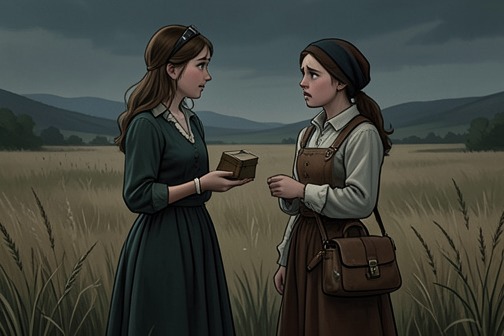
[Ruth](entity:character-recall-character-ruth-5948dc08d1c1)’s request that [Kathy](entity:character-recall-character-kathy-cb914b1b0058) help her reconcile with [Tommy](entity:character-recall-character-tommy-6e67d140947b) turns a private conversation between friends into a test of trust and a delicate act of mediation. After [Ruth and Tommy](entity:relation-recall-relation-a6b636f65e5e)’s breakup, she asks Kathy—the person she believes Tommy will hear—to speak on her behalf. Kathy agrees, but not before asking whether Ruth is serious and whether she will treat Tommy differently if they reunite. The scene’s warmth and intimacy therefore carry an unresolved risk: Kathy is asked to help restore a relationship whose earlier hurt she has witnessed.
## Background and Setting
Ruth and Tommy had been a couple for about six months, the period in which their relationship had become publicly known. In Kathy’s later recollection, they stood apart from more demonstrative couples: they did not perform their affection for an audience, and their occasional cuddling seemed intended for one another. Their breakup unsettles Kathy’s own plans. She had been preparing to become sexually involved with Harry, but had delayed acting on that intention; after Ruth and Tommy split, the situation became confused.
The request comes during a summer when students at [Hailsham](entity:location-recall-location-hailsham-24972e3ee84f) often gathered in the fields around a shared Walkman, taking turns with its headset. Kathy is sitting with several girls when Ruth approaches and asks to talk. Kathy recognizes the seriousness of the approach, leaves the others, and walks with her to their dorm hut. That movement away from the open, shared gathering gives the conversation a private setting before either friend has named what is at stake.
## The Conversation in the Dormitory
In their room, Kathy sits on Ruth’s bed near the window, while Ruth sits on Kathy’s bed by the back wall. Sunlight has warmed the blanket. For a moment the scene is ordinary and playful: a bluebottle flies between them, and they wave their hands to make it dart back and forth in a game they call bluebottle tennis. Once it escapes through the window, Ruth makes her request directly: she wants to get back together with Tommy and asks Kathy to help.
Kathy says she is surprised, given what has happened, but agrees to help. Ruth stresses that she has not told anyone else—not even Hannah—and that Kathy is the only person she trusts with the wish. She does not ask Kathy to arrange a meeting or deliver a particular message. Instead, she asks her to talk to Tommy, believing he will listen because Kathy has always been able to speak with him and will be honest about Ruth’s intentions.
## Kathy’s Doubt and Agreement
Kathy does not accept the task without qualification. She asks Ruth whether she is serious about Tommy and whether she will hurt him again if Kathy persuades him to return. The question makes the request more than a favor between friends: Kathy is being asked to lend her credibility to Ruth, and she wants to know that Tommy will not simply be exposed to another cycle of hurt. Ruth answers that they are adults now and that, with their departure from Hailsham approaching, the relationship is no longer a game.
Kathy then agrees. Her reasoning is practical as well as affectionate: they will be leaving soon and cannot afford to waste time. Ruth has also made clear that she regards Kathy as the right intermediary. She says that Tommy respects Kathy, admires her courage and reliability, and has spoken of preferring her support if he were in a difficult position. Ruth’s appeal thus depends not only on Kathy’s friendship with her but on the distinct trust Kathy has earned from Tommy.
After Kathy accepts, Ruth revisits the relationship repeatedly. She wants to go over why she and Tommy suit each other, what went wrong, and how they would behave differently if they reunited. She imagines keeping the relationship more private and having sex in better places and at better times. The repeated discussion shows Ruth trying to turn her wish into a workable plan, while Kathy becomes both listener and adviser. At one point Ruth moves beside Kathy and squeezes her shoulders, saying she knew they could depend on her. The gesture confirms the trust behind the request, even as it places Kathy inside the couple’s private hopes.
## First Consequences and Wider Significance
Kathy does not get a chance to speak to Tommy for several days. When she finally approaches him, he is alone at the edge of the South Playing Field, practicing with a football. Kathy sits on the grass behind him and opens the conversation. The approach is not easy: she recalls that they were uncertain about their own standing after a recent awkward encounter. The request therefore sets in motion a conversation between [Kathy and Tommy](entity:relation-recall-relation-3b68ea15dbf8) as well as asking Kathy to carry Ruth’s appeal; she must approach him in her own right, not merely repeat Ruth’s claims.
In the larger pattern of Kathy’s life, the episode anticipates how personal attachment and care become intertwined. Years later, she explains that choosing donors allowed her to become close again to Ruth and Tommy after the years apart, and that her long carer career was sustained by feeling for the people she cared for. Ruth was among the first donors Kathy chose, and seeing her again at the recovery centre in Dover made their shared past more important than the differences between them. At Ruth’s bedside after her second donation, Kathy promises to become Tommy’s carer as soon as she can. These later events do not establish the immediate success of the reconciliation request; instead, they reveal how the friendship’s trust continues to shape Kathy’s acts of care. The dormitory conversation is an early instance of that pattern: Kathy is asked to listen, judge what is needed, and respond to someone she loves without being able to control what follows.
Event 7
Miss Lucy leaves Hailsham
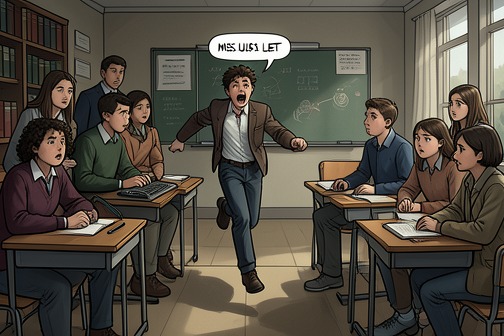
[Miss Lucy leaves Hailsham](entity:event-recall-event-miss-lucy-leaves-hailsh-285280ee3ada) in an abrupt announcement that makes her absence permanent and reshapes the students’ final days at the school. Recounted by [Kathy](entity:character-recall-character-kathy-cb914b1b0058) as a memory, the event moves from classroom rumor to official confirmation, then into the unsettled relationships of [Tommy](entity:character-recall-character-tommy-6e67d140947b), [Ruth](entity:character-recall-character-ruth-5948dc08d1c1), and Kathy; the reason for [Miss Lucy](entity:character-recall-character-miss-lucy-f91328e8593e)’s departure is not explained in this account.
## The Announcement
The news broke midway through the morning, at the end of another Culture Briefing, a role-playing class that left the students both excited and worried. As they filed out, Charlotte F. rushed in with word that Miss Lucy had left [Hailsham](entity:location-recall-location-hailsham-24972e3ee84f). Mr. Chris, who had been leading the class and apparently already knew, shuffled away guiltily before the students could question him. At first they were unsure whether Charlotte was repeating a rumor, but the details soon made the departure certain.
The news had originated in another Senior class. Its students had expected Music Appreciation with Miss Lucy, but [Miss Emily](entity:character-recall-character-miss-emily-50ca2bb99504) was there instead and said she would take the lesson. For roughly twenty minutes, the class proceeded normally. Then, while speaking about Beethoven and apparently in mid-sentence, Miss Emily stopped to announce that Miss Lucy had left Hailsham and would not return. The class ended several minutes early; Miss Emily hurried away with a preoccupied frown, and the students carried the news out with them.
## Kathy Tries to Reach Tommy
Kathy immediately went to find Tommy because she wanted him to hear the news from her first. In the courtyard, however, she saw him already among a circle of boys, listening and nodding as they discussed the departure. The other boys seemed animated, perhaps even excited, while Tommy’s eyes looked empty. Kathy’s attempt to be the one to tell him therefore fails before she can speak, leaving her to witness his reaction from the edge of the group.
The timing gives the announcement a personal charge. The day before, [Kathy and Tommy](entity:relation-recall-relation-3b68ea15dbf8) had spoken about his uncertainty over getting back together with Ruth and the need to think carefully about what came next. Their conversation had been interrupted, and Kathy left feeling she had somehow let Ruth down. She never learned what effect the talk had on Tommy: Miss Lucy’s departure became the next day’s news, and the moment she had hoped to share with him was already gone.
## Reconciliation and Aftermath
That same evening, Tommy and Ruth got back together. A few days later, Ruth found Kathy and thanked her for having sorted things out so well. Kathy doubted that she had helped much, but Ruth would not accept that qualification. The reconciliation thus followed Kathy’s conversation with Tommy and her effort to reach him after the announcement, although Kathy herself remained unsure how much either action had contributed.
Ruth’s gratitude changed Kathy’s standing with her: Kathy was firmly back in Ruth’s good books. Their renewed ease, and Tommy and Ruth’s reconciliation, persisted through the final days at Hailsham. Miss Lucy’s departure is therefore presented not only as a sudden institutional loss, but also as the point around which a private sequence of concern, missed timing, and renewed closeness gathers. The account confirms that Miss Lucy will not return, while leaving the explanation for her departure unstated.
Event 8
Norfolk trip
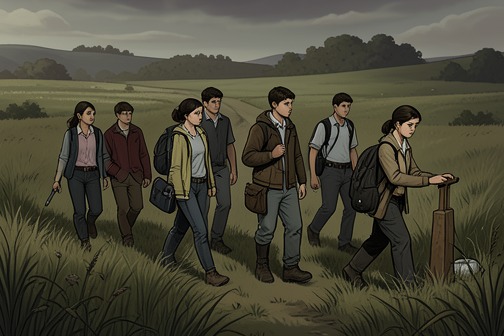
The [Norfolk trip](entity:event-recall-event-norfolk-trip-398d0916af83) is an outing to find [Ruth](entity:character-recall-character-ruth-5948dc08d1c1)’s possible, but its decisive turn is the collapse of that hope. [Kathy H.](entity:character-recall-character-kathy-h-54954f6c29c4), Ruth, [Tommy](entity:character-recall-character-tommy-6e67d140947b), [Chrissie](entity:character-recall-character-chrissie-e873eac664b4), and [Rodney](entity:character-recall-character-rodney-0b959c3ac75d) set out from the Cottages expecting to test whether a woman Rodney has seen at work might be the person from whom Ruth was modeled. The search first invites them to imagine a life beyond their own; when that imagined resemblance fails, Ruth gives blunt expression to what the group has been reluctant to say about their origins and social place.
## Background and departure
[Chrissie and Rodney](entity:relation-recall-relation-057b7144d039)’s confidence in the search grew from their awe of [Hailsham](entity:location-recall-location-hailsham-24972e3ee84f). Though Chrissie had initially treated the younger students with a slightly patronizing manner, [Kathy](entity:character-recall-character-kathy-cb914b1b0058) later recognizes that she regarded being from Hailsham as a special distinction. Ruth’s occasional stories about an office job had encouraged Chrissie to imagine that Hailsham students might be subject to a separate set of rules. Ruth did not, as Kathy recalls it, directly lie; she allowed some assumptions to stand and suggested others without correcting them. Kathy sometimes could have exposed the gap between Ruth’s stories and reality, but chose not to.
That background makes Kathy wary when Chrissie and Rodney claim to have seen Ruth’s possible. She does not want Ruth to go to [Norfolk](entity:location-recall-location-norfolk-cb7f812776bb), though she cannot explain her reluctance at first. Ruth is determined to go, and Kathy decides to accompany her. Ruth initially seems less than pleased, and appears for a time unwilling to include Tommy either. In the end all five go together. The journey thus begins with a fragile social arrangement: Ruth wants to make an impression on the veterans, while [Kathy and Tommy](entity:relation-recall-relation-3b68ea15dbf8) are also part of the group whose Hailsham identity has helped make the search seem plausible.
The trip itself nearly falls through before it begins. Rodney, who has a driving licence, had arranged to borrow a car from farm-workers at Metchley, a couple of miles away, but that arrangement broke down the day before departure. He walked to the farm and secured the promise of another car, so the outing went ahead. Kathy singles out Ruth’s response during the hours when cancellation seemed possible, although the account here does not specify what Ruth did. The threatened interruption nonetheless makes clear how firmly she is set on going.
## The journey and the seaside town
The group travels through the night and, after about an hour on the road, stops as day is breaking. Beside a large empty field, they jump over a ditch to stretch and warm their hands. Kathy notices Ruth standing apart, looking across the field toward the sunrise. She suggests that Ruth exchange seats with her: Ruth could continue talking with Chrissie, while Kathy and Tommy could talk together. Ruth reacts sharply, pulling Kathy around so their backs face the others and they can argue without being seen. Her concern, Kathy realizes, is not simply the seating arrangement. Ruth is trying to present herself—and, by extension, all of them—to Chrissie and Rodney in the right way, and fears that Kathy will cause an embarrassing scene. Kathy touches Ruth’s shoulder and returns to the group; the seating stays as it was. Ruth then sits back and answers Chrissie and Rodney’s attempts to speak with her in sulky monosyllables.
The mood lifts when they reach a seaside town around lunchtime. They leave the Rover beside a mini-golf course marked by fluttering flags. The day is crisp and sunny, and the five feel exhilarated simply to be out together. Rodney whoops and waves his arms as he leads them up a road past houses and shops, toward the sea. From the cliff-edge road, they first see what looks like a sheer drop to the sand; leaning over the rail reveals footpaths zigzagging down the cliff face. Hungry, they stop at a small café perched near one of the paths. Its two workers, smoking at a table, retreat to the kitchen, leaving the visitors alone in the room. For a while, the outing’s immediate pleasures overshadow the purpose that brought them there.
## The office behind the glass
After the seaside interlude, the group follows Rodney in search of the office where he says he saw Ruth’s possible the previous month. Their mood is already strained, and Rodney repeatedly chooses wrong turns from the High Street. At least four times he leads them toward a stretch where the shops and offices run out, forcing them to turn back. He becomes defensive and nearly gives up, but then stops and silently points across the street.
The office is not identical to the advertisement they once found on the ground, though it resembles it. Its large glass frontage makes the workroom visible from the street: about a dozen desks arranged in irregular L-shapes, potted palms, shiny machines, and curved desk lamps. Employees move between desks, lean on partitions to chat, or pull swivel chairs together to share coffee and sandwiches. The room looks comfortable and self-contained, a complete everyday world exposed to view. Tommy observes that the employees are eating lunch at their desks rather than going out, and says he cannot blame them. Ruth, however, looks anxiously from face to face behind the glass. The more closely the group inspects the scene, the more the possibility becomes a test of likeness rather than a passing resemblance in an advertisement.
## The gallery and the failed identification
The group follows the woman they have taken to be Ruth’s possible into a gallery. Inside, she is speaking with a much older, silver-haired woman who seems to be in charge. The visitors spread out and pretend to study the paintings. Kathy, preoccupied with the search, nevertheless finds herself drawn into the quiet of the room: peppermint-colored walls and ceilings, fragments of fishing net and rotted boat wood near the cornicing, and mostly oil paintings in deep blues and greens with sea subjects. Tired after travelling since before dawn, the five drift into separate corners and make occasional hushed comments about the pictures.
The women’s conversation carries across the gallery. They are discussing a man they both know and his lack of understanding of his children. That ordinary conversation changes the group’s perception. Seen through the office window, the woman could still sustain the hopeful resemblance; heard at close range and watched in the gallery, she becomes increasingly unlike Ruth. Kathy senses the change spreading among them and sees that Ruth, absorbed in a picture on the other side of the room, feels it too. They linger rather than confer, as if delaying the moment when they must acknowledge what they have seen. When the woman leaves, none of them follows her. Their silence and avoidance of one another’s eyes register a shared conclusion before anyone states it.
Back near the cliff edge, where boarded-up stalls line the promenade below, Chrissie says that they agree the woman is not Ruth. She apologizes and touches Ruth’s shoulder, conceding that the resemblance through the office windows had made the attempt understandable. Rodney also apologizes, but does so with a smile that suggests he does not expect to be blamed for having tried to help. Ruth gives little away: she says nothing, shrugs off the touch, and looks toward the sky rather than the water. Kathy can tell she is upset, though a stranger might mistake her expression for thoughtfulness. The failed identification is therefore not only a disappointment about one woman. It exposes how much hope the group had invested in an image glimpsed through glass.
## Ruth’s account of their origins
Ruth eventually says she knew all along that the idea was stupid. Tommy tries to soften the admission by calling the search a bit of fun, but Ruth rebukes him and insists that no one is listening. She then tells Chrissie and Rodney that people do not use someone like the woman as a model for them. Kathy attempts to stop her, but Ruth continues, listing the kinds of people she believes they come from: addicts, prostitutes, alcoholics, tramps, and possibly convicts, provided they are not psychopaths. She argues that the older woman in the gallery had taken them for art students and would have thrown them out if she had understood who they really were. In Ruth’s account, a serious search for possibles would mean looking in the gutter or rubbish, not in a polished office or among people living respectable lives.
Rodney responds steadily, warning Ruth to drop the subject and suggesting that they go to see Martin, who is free that afternoon. Chrissie puts an arm around Ruth and encourages her to go along. Their gestures return the scene to the group’s practical effort to comfort her, but they cannot undo what the search has brought into the open. The trip begins with a possibility sustained by Hailsham’s special standing and Ruth’s suggestive stories; it ends with the distinction Ruth draws between the life the group hoped to recognize and the origins she believes society assigns them. The office window offered a view into another world, while the gallery brought that world close enough to make the imagined connection fail.
Event 9
Recovering Judy Bridgewater’s cassette
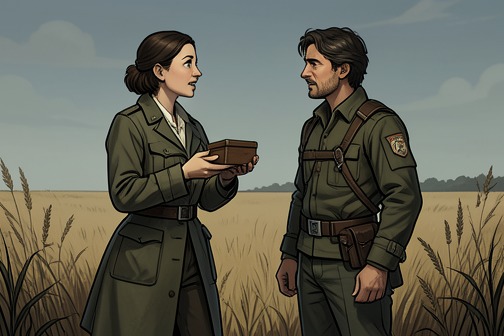
[Recovering Judy Bridgewater’s cassette](entity:event-recall-event-951d194fbc1b) in [Norfolk](entity:location-recall-location-norfolk-cb7f812776bb) turns a search for a lost possession into an intimate encounter with shared memory. [Kathy and Tommy](entity:relation-recall-relation-3b68ea15dbf8) set out to find the [Songs After Dark cassette](entity:object-recall-object-songs-after-dark-casse-e8e7de270ad6) she had lost at [Hailsham](entity:location-recall-location-hailsham-24972e3ee84f), but the outing matters as much for the time they spend looking together as for the object they recover. [Tommy](entity:character-recall-character-tommy-6e67d140947b)’s admission that he once searched for it on her behalf gives the discovery a history of its own, while [Kathy](entity:character-recall-character-kathy-cb914b1b0058)’s mixed response shows that finding the tape cannot simply restore the past.
## Origins of the Search
At Hailsham, the cassette was one of Kathy’s most precious possessions. The lost original was the album Songs After Dark by Judy Bridgewater; years later, Kathy still had a copy and sometimes listened to it while driving through the countryside. She distinguished that copy from the one she had lost as a student: the surviving cassette was the one she and Tommy found in Norfolk. The recovery therefore returns an object associated with her childhood, but it does not retrieve the original itself.
The loss had mattered to Kathy at the time. [Ruth](entity:character-recall-character-ruth-5948dc08d1c1) arranged for other students to look for the tape and told them Kathy was deeply upset by its disappearance. Tommy later explains that he had joined the search without telling Kathy. He looked for a long time, including in boys’ dormitories, because he thought he might be able to search places she could not. His effort had remained unspoken for years, so the Norfolk outing uncovers not only a replacement cassette but also a private act of care from their Hailsham past.
## The Norfolk Search
The later search begins after Tommy tells Kathy that he had been trying to find something for her in a shop. He had gone looking for the lost cassette, but could no longer remember its name. Once Kathy understands what he means, she directs him toward second-hand shops, where records and tapes might turn up among old books and clothes. The pair initially enter the wrong kinds of stores, including bookshops and shops selling old vacuum cleaners. Tommy then takes charge, and by chance they find a street with four suitable shops close together.
Those shops are full of accumulated odds and ends: dresses, handbags, children’s annuals, creased paperbacks, postcards, trinkets, war medals, and photographs of soldiers in the desert. Their interiors smell stale, and cardboard boxes hold the records and tapes they have come to inspect. Before long, Kathy and Tommy are absorbed in browsing together, drifting apart among the clutter and then meeting again beside the same box. The search’s original purpose recedes; their shared attention to the shops becomes a pleasure in itself.
## Finding the Cassette
Kathy comes upon the cassette while idly moving through a row of cases. Its cover is immediately recognizable: Judy with a cigarette, a coquettish glance toward a barman, and blurred palm trees behind her. The discovery does not produce an instant celebration. Kathy stands still, unsure whether she is delighted, and briefly considers pretending she has not seen it. Since finding the tape may end the outing, she feels regret at the possibility that their enjoyable search will be over. She also feels an unexpected embarrassment, as if the object belonged to a younger self she ought to have outgrown.
She finally calls Tommy over and shows him the case. Her pleasure rises sharply, but it is complicated enough to threaten tears. Tommy asks whether it could be the actual cassette she lost. Kathy can recall the design on its back and the track titles, confirming how thoroughly the old object has stayed in her memory, though the case alone cannot establish that this is the very copy from Hailsham. Her identification settles on the album, not on the recovered tape’s provenance.
Tommy is pleased for her, but the moment also stirs his own old fantasy of finding the tape and returning it. He had imagined what Kathy would say and how she would look; as he watches the case in her hand, he becomes absorbed in that memory. In the dimmer, more secluded back of the shop, he suddenly takes the case and heads toward the counter, determined at least to buy it for her. The old shopkeeper has to find the cassette to match the case. The purchase gives Tommy a way to make good, in the present, on the gift he once hoped to give.
## What the Object Preserves
Kathy does not fully appreciate having the cassette back until she is alone in her room at the Cottages. At first, its value is mainly nostalgic. Looking at it later recalls not only her Hailsham days but also the Norfolk afternoon: the rummaging through dusty boxes, the ease of spending time with Tommy, and the moment he revealed his earlier search. The recovered object thus acquires memories from both the loss and the recovery, joining two periods of their relationship without making them identical.
The discovery also marks a small reversal in the outing. The tape is the reason Kathy and Tommy begin searching, yet finding it threatens to take away the activity that has made them happy. Once it is found, Kathy briefly wishes the search could continue; Tommy, meanwhile, is caught up in the thought of the earlier gift he never delivered. The cassette’s return brings pleasure, but it cannot return them to Hailsham or undo the years in which the gesture went unspoken. Its lasting significance lies partly in this double remembrance: for Kathy, it becomes as much a record of their Norfolk afternoon as of the childhood to which the song first belonged.
Event 10
Tommy proposes the gallery and deferral theory
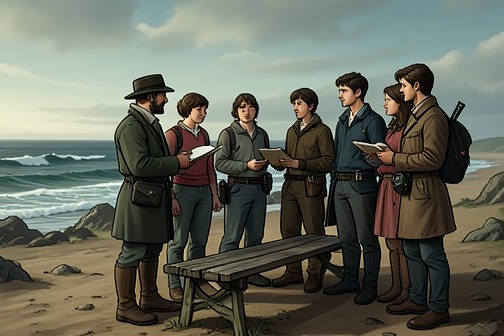
[Tommy proposes the gallery and deferral theory](entity:event-recall-event-25ce00bd797e) as an explanation for why [Madame](entity:character-recall-character-madame-e4b986404c22) collected student artwork and as a possible route to extra time for couples who were truly in love. In a conversation with [Kathy H.](entity:character-recall-character-kathy-h-54954f6c29c4) on a coastal walk, he joins the [Donation Deferral](entity:state-recall-state-ea144594a9aa) Rumor circulating among veterans to [Hailsham](entity:location-recall-location-hailsham-24972e3ee84f)’s Gallery and its claim that art revealed its makers’ inner selves. The theory gives new meaning to a familiar childhood practice, but its personal stakes are severe: [Tommy](entity:character-recall-character-tommy-6e67d140947b) suspects that he may have lost a chance he did not know he had. A later explanation by [Miss Emily](entity:character-recall-character-miss-emily-50ca2bb99504) establishes that the artwork served a different purpose.
## Origins in Hailsham’s [Exchanges](entity:concept-recall-concept-exchanges-715ff3a95a20)
Tommy’s reasoning draws on a childhood world in which art had a visible place in the students’ everyday economy. At Hailsham, Exchanges took place four times a year, after students had spent three months making paintings, drawings, pottery, or sculptures from whatever materials were in fashion. Guardians assigned each work a number of [Exchange Tokens](entity:concept-recall-concept-exchange-tokens-b73fb8ec9cd5); students then used those tokens to acquire work made by others in their own year. The Exchanges were one of the few ways students could build personal collections, filling wooden chests with objects to display or carry between rooms.
That system also made creative ability part of the school’s social currency. Students learned to value what they made and to notice how much esteem was attached to producing work others wanted. In Tommy’s recollection, the Gallery raised a related but more troubling question: why did Madame take away some of the best work? The practice had initially seemed an honour, but by the time students were ten, pride in having work selected had begun to conflict with the sense that they were losing possessions with market value. The disagreement became the tokens controversy, when some students argued that they should receive tokens to compensate for work Madame removed.
The dispute brought Roy J. to Miss Emily, the head guardian, to ask why Madame took their work. Tommy remembers Miss Emily’s explanation that the students’ art revealed what they were like inside, and that their pictures and poetry revealed their souls. That remark becomes the key piece of evidence in his later interpretation. The collection, he reasons, might do more than preserve or display childhood work: it might let someone assess the students through what they had created.
## The theory on the coastal walk
Tommy raises the idea while walking with Kathy H. after they leave a shop. [Chrissie and Rodney](entity:relation-recall-relation-057b7144d039), he says, are convinced that couples who are genuinely in love can have their donations deferred. They believe the Hailsham students know about this arrangement, although Tommy recalls no such discussion at school. He links the rumor to veterans, and suggests that people such as [Ruth](entity:character-recall-character-ruth-5948dc08d1c1) have helped keep it alive. His manner leaves [Kathy](entity:character-recall-character-kathy-cb914b1b0058) unsure whether his remarks about Ruth carry affection or disapproval, but he soon makes clear that he has been thinking about the rumor seriously.
For Tommy, a [Deferral](entity:state-recall-state-deferral-5746003e3c0b) would require someone to distinguish lasting love from a couple’s strategic claim, a temporary crush, or sexual attraction. He imagines that Madame, or another decision-maker, would need evidence on which to base that judgment. [The Gallery](entity:concept-recall-concept-the-gallery-5f6f3e9db14f) could supply it: Madame might compare work made by two students over many years and decide whether their inner selves matched. In this account, the collected pictures become a record of character, and artistic creation becomes a means of verifying love.
Kathy H. recognizes the connection Tommy is making between Miss Emily’s remark and the Gallery, but she does not confirm that his conclusion is true. She recalls [Laura](entity:character-recall-character-laura-e8b3bd8aefc4)’s drawing of her intestines, a comic contrast with the grand idea that the students’ work could reveal their souls. She allows that Tommy’s explanation could account for what Miss Emily said and for the guardians’ insistence that students learn to paint. The exchange therefore presents the theory as a plausible reconstruction of incomplete childhood explanations, not as established knowledge.
## The personal cost of the hypothesis
The theory changes the meaning of Tommy’s childhood exclusion from creative recognition. He concludes that Hailsham students had a special chance, and that work not placed in the Gallery might have represented a chance thrown away. He tells Kathy H. that, if his reasoning is right, he may have blown his opportunity. When she asks whether he ever had work taken for the Gallery, he shakes his head and describes himself as useless at art. He also remembers [Miss Lucy](entity:character-recall-character-miss-lucy-f91328e8593e)’s earlier reassurance that his lack of artistic ability did not matter, but now suspects that she had comforted him rather than told him the truth.
That fear follows from the conditional structure of the theory. Tommy has no assurance that a Deferral exists, that Madame’s collection is used to evaluate couples, or that his own work would have affected the outcome. Yet each possibility becomes emotionally consequential once he imagines the Gallery as an application archive. What had seemed a mystery about childhood artwork turns into a retrospective judgment on his chances. His joking recognition that he may have missed out does not erase the anxiety beneath it.
The idea also helps move the characters toward action. Ruth later gives Tommy a crumpled piece of paper bearing Madame’s address, saying that he should keep it for when Kathy H. changes her mind and that he must at least try. Her gesture turns the abstract theory into a possible visit, while leaving its truth unresolved. The address is not proof of a Deferral; it is a way to pursue the possibility Tommy has constructed from the evidence available to him.
## What the Gallery was for
When Kathy H. and Tommy later speak with Miss Emily, her account overturns the proposed explanation. She says that even when Hailsham and its allies had been most influential, granting a Deferral would have been beyond their power. She explains that the artwork was collected and selected for special exhibitions as part of a public campaign: the displays were meant to demonstrate that students raised in humane, cultivated surroundings could be as sensitive and intelligent as ordinary human beings.
Miss Emily describes the movement’s public work, including large events attended by cabinet ministers, bishops, and other prominent people, where speeches were made and funds pledged. The Gallery’s purpose was not to compare the work of lovers or decide which couples merited extra time. It was to make the students’ humanity visible to a society that had treated clones as instruments of medical science. The paintings and poems mattered, but the theory Tommy builds from them is mistaken about who used them and to what end.
The episode turns on the difference between evidence and inference. Miss Emily’s words about art revealing the students’ inner selves are real, as is the removal and preservation of their work; Tommy’s account of a romantic assessment process is an attempt to connect those facts to the Donation Deferral Rumor. Its emotional force comes from that gap: a theory can offer hope and intensify regret even before anyone verifies it. The later explanation restores the Gallery’s political purpose while confirming that Hailsham’s efforts to protect and advocate for its students did not extend to securing the Deferral Tommy imagined.
Event 11
Churchyard quarrel
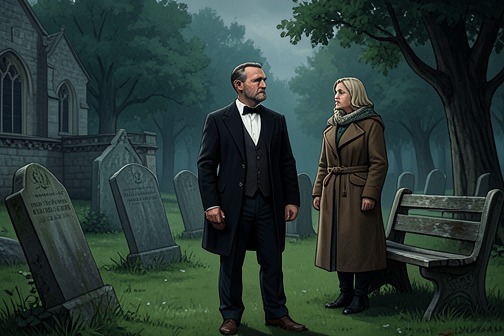
The [Churchyard quarrel](entity:event-recall-event-87288f9b3bd8) is a confrontation among [Kathy](entity:character-recall-character-kathy-cb914b1b0058), [Ruth](entity:character-recall-character-ruth-5948dc08d1c1), and [Tommy](entity:character-recall-character-tommy-6e67d140947b) in which a private joke about [Tommy’s animal drawings](entity:object-recall-object-32704b310cad) becomes a public wound. Kathy’s silence when Ruth reveals that she had laughed at the drawings damages her closeness with Tommy; in retrospect, she recognizes the exchange as one point at which the friends’ lives began to separate.
## Setting and Immediate Context
Several days before the quarrel, [Kathy and Ruth](entity:relation-recall-relation-aa17f85e55fe) had laughed together about Tommy’s animals. Kathy joined in, joking about the appearance of particular drawings, although she knew Tommy took his work seriously and could have defended it. She later recalls that the laughter felt affectionate at first, and that she failed to say the animals were good or acknowledge how far Tommy had come. She also admits that, in the moment, she was pleased by the possibility that Ruth did not take the drawings seriously. The shared joke therefore left Kathy with a truth she had not chosen to voice and Ruth with knowledge she could later use.
The confrontation took place at an old church about half a mile from the Cottages. Ruth had made a habit of reading in its overgrown grounds, among old gravestones leaning in the grass, on a bench beneath a large willow. Kathy had not initially liked this new routine: it displaced the earlier custom of sitting together in the grass outside the Cottages. Still, when she knew Ruth might be at the church, she sometimes went through the low wooden gate and along the path. On the afternoon of the quarrel, she arrived in a dreamy mood, reading names on the gravestones, and found Ruth on the bench with Tommy beside her.
At first the meeting gave Kathy no clear warning. Tommy stood with one foot on the bench’s rusty armrest, stretching as he talked with Ruth, and Kathy went over to them without hesitation. She began telling them gossip about a newcomer; for a while, they listened and asked occasional questions. Only after some time did she sense that something was amiss and, in a joking tone, asked, “Did I interrupt something here?”
## The Confrontation
Ruth made Tommy’s theory the subject of the encounter, announcing that he had told her about it and was now allowing her to hear it too. She called it his “big Gallery theory!” Tommy sighed, and Ruth mocked the idea that he could persuade [Madame](entity:character-recall-character-madame-e4b986404c22) by showing her his small animals. Although she conceded that people might accept the theory itself, she treated the animals as an absurd basis for Tommy’s hopes. Her teasing turned a discussion of his work into a test of whether Kathy would support him.
Kathy wanted to defend Tommy but could not find a way to do so without making Ruth angrier. Ruth then said, “It’s not just me, sweety. Kathy here finds your animals a complete hoot.” The claim struck Kathy as accurate enough to leave her unable simply to deny it. She immediately remembered the earlier evening in her room, when she and Ruth had laughed over the drawings. What Ruth disclosed was not merely that Kathy had once laughed; it was that she had withheld from Tommy the fact that she had done so.
Ruth urged Tommy not to let others know he was serious about the creatures, framing the laughter between herself and Kathy as harmless so long as it remained private. She told him that their joking did not matter because it was “just us,” but asked him not to involve everyone else. The distinction sharpened the injury: Tommy’s work was treated as a joke between his friends even while he regarded it seriously, and Kathy was made part of Ruth’s account of that joke. Tommy stopped stretching and looked at Kathy. She saw him as suddenly childlike and unguarded, with something dark and troubling gathering behind his eyes.
Kathy later considered several responses she might have made: denying Ruth’s claim, challenging her version of the laughter, explaining that her participation had not meant what Ruth implied, or going to Tommy and embracing him. At the time, however, she felt exhausted by the tangled situation and did nothing. In her recollection, her silence seemed to tell Tommy that Ruth was right. His anger briefly gave way to an expression of wonder, a reaction Kathy could still recall vividly years later. She then turned and walked away, partly because she feared one of the others would leave first and she would be left alone with the other. For several minutes, she felt that she had triumphed by leaving them together, though she later judged her departure a mistake.
## Aftermath at the Cottages
Kathy initially treated the encounter as one more quarrel of the kind the three had experienced before. She behaved toward [Ruth and Tommy](entity:relation-recall-relation-a6b636f65e5e) as though nothing unusual had happened, and they did much the same. Yet the quarrel left something unresolved. Ruth and Tommy continued to perform the gestures of a couple, including punching one another on the arm when they parted, but Kathy could see that they had grown distant. What had seemed like a three-way confrontation had exposed strain within both relationships: Kathy’s failure to defend Tommy and Ruth’s use of that failure against him.
Kathy felt guilty about the animals, but an apology was no longer an easy repair. She believed that, earlier in their time together, she and Tommy might have talked the matter through. By the second summer at the Cottages, speaking to him had become harder. Their outward manner remained much as before, but they never discussed the drawings or what had happened in the churchyard. The silence did not resolve the injury; it made it part of the distance between them.
The quarrel also unfolded as the friends’ wider circumstances were changing. More [Hailsham](entity:location-recall-location-hailsham-24972e3ee84f) students were leaving to become carers, and among their former classmates that route increasingly seemed natural. Students could begin training without finishing their essays, although at first the idea of abandoning the work would have been unthinkable. As Hailsham receded in importance and fewer students stayed, Kathy worried that their fading commitment to the essays would also weaken what bound them together as Hailsham students. She tried for a time to preserve their enthusiasm for reading and note-taking, but with no reason to expect that they would see their guardians again, the effort began to feel futile. Against that gradual dispersal, the quarrel was not the only force pulling the friends apart, but Kathy later understood it as an incident that helped finish the separation already under way.
## Retrospective Significance
Kathy’s account gives the quarrel its importance through hindsight. She says that only long after leaving the Cottages did she understand how significant the encounter had been. At the time, she saw an upsetting episode, not a break in a friendship that had once seemed closely interwoven. Later, she imagines that if the three had recognized the forces drawing them apart, perhaps they would have held on to one another more tightly. The remembered scene therefore carries two meanings at once: a specific failure to speak up in the churchyard, and a belated recognition that the friends’ shared life was already becoming difficult to preserve.
That failure also stands in contrast to Kathy’s later understanding of care. She describes learning to recognize when a donor needs company or comfort and when to leave them alone, and she values being able to care for people with whom she shares a past. Choosing donors from that past allows her to grow close again to Ruth and Tommy after years apart. When Ruth is gravely ill after her second donation, Kathy sits beside her, holding her hand, and promises to become Tommy’s carer as soon as she can. The promise recalls the earlier division between the three, but it does not undo the churchyard silence; instead, it shows how their bond persists through later acts of practical, intimate care. Tommy’s subsequent question about whether being a good carer is truly important further exposes the difference between the work’s institutional outcome and the personal value Kathy finds in staying beside someone.
Event 12
Ruth talks with Kathy at the bus shelter
[Ruth talks with Kathy at the bus shelter](entity:event-recall-event-4219e515611a) during their unsettled life at [The Cottages](entity:location-recall-location-the-cottages-ecf7c93783a8), in a conversation that brings the triangle between [Ruth](entity:character-recall-character-ruth-5948dc08d1c1), [Kathy](entity:character-recall-character-kathy-cb914b1b0058), and [Tommy](entity:character-recall-character-tommy-6e67d140947b) into the open without resolving it. Ruth acknowledges that her relationship with Tommy may not last and tells Kathy that Tommy would not regard her as a girlfriend. The disclosure sharpens the distance between the two women even as it becomes part of the longer history of their care for one another: Kathy later chooses Ruth as a donor, and eventually promises, at Ruth’s bedside, to become Tommy’s carer.
## Setting and Immediate Context
The conversation takes place after a day of rain and thunderstorms, when the evening finally clears into a pink sunset. Kathy suggests that she and Ruth go out for air. They climb a steep footpath along the edge of a valley to an old bus shelter where buses have long since stopped running. The bus-stop sign is gone, and only the frame of the timetable display remains, but the wooden shelter and its bench are still intact. Its open side faces the fields descending the valley, a quiet, exposed place apart from the Cottages.
Kathy chooses the walk because she wants to address what happened in the churchyard between herself and Tommy. She had once expected that she could simply apologize to Tommy and explain herself, but by this point she finds it harder to speak openly with him. She has come to think that matters may still be different with Ruth, and proposes that they sort out the recent quarrel. Ruth initially treats their arguments as foolish rows over trivial things. Kathy, however, does not want them to smooth over the incident without discussing it. She suggests that being part of a couple can make it harder to see a situation clearly, whereas someone outside the couple may see it differently.
## Ruth’s Disclosure
As Ruth picks flakes of wood from the bench, she says that she has wanted to tell Kathy something but has not known how or when. She asks Kathy not to be too angry, then explains that she has been thinking that she and Tommy may not remain a couple forever. She presents that possibility as no tragedy: they were right for each other once, but whether they will always be right for each other is uncertain. She stresses that they are not about to split up.
Ruth connects this possibility to the circulating talk about deferrals for couples who can prove that they are truly suited to one another. In that context, she says it would be natural for Kathy to wonder what might happen if [Ruth and Tommy](entity:relation-recall-relation-a6b636f65e5e) separated. But Ruth adds that Tommy likes Kathy and thinks highly of her without seeing her as a proper girlfriend. She attributes this to his supposed dislike of girls who have been with several people, describing it as a particular fussiness of his. Kathy responds that it is useful to know, while Ruth touches her arm and reassures her that Tommy thinks the world of her.
The disclosure is carefully qualified: Ruth denies that a breakup is imminent while inviting Kathy to imagine its consequences, and presents her claim about Tommy as something Kathy ought to know. The conversation therefore reveals both Ruth’s awareness of Kathy’s feelings and the obstacle she places between [Kathy and Tommy](entity:relation-recall-relation-3b68ea15dbf8). Kathy does not challenge the explanation in the moment, but the disclosure does not bring her and Ruth into uncomplicated agreement.
## The Rhubarb Patch and the Fracture
After discussing the serious matter, the two women talk about what they might do on a trip. Kathy remembers a childhood picnic at [Hailsham](entity:location-recall-location-hailsham-24972e3ee84f), when a gust of wind blew the top layer off a cake being carried back from the main house. The incident had revealed that the boy carrying it had come through the rhubarb patch, a route that was out of bounds. Ruth says she can only vaguely remember the episode. When Kathy reminds her what was forbidden, Ruth asks what was wrong with using that route.
Kathy hears the question as false, not as an innocent failure of memory, and tells Ruth that she knows the path was prohibited. Ruth asks what the rhubarb patch has to do with their conversation and tells her to continue. Their walk back to the Cottages is more or less friendly, but the atmosphere does not recover. They part by the Black Barn without their customary small touches on one another’s arms and shoulders.
The disagreement matters because Kathy sees it as part of the same attempt to sort things out: even after the central disclosure, she does not want the women to return to an easy surface by pretending not to remember what they share. The old Hailsham rule is a small, concrete test of their trust. For Kathy, Ruth’s feigned forgetfulness makes the carefully opened conversation feel less honest, not more settled.
## Aftermath and Longer Significance
Not long afterward, Kathy decides to train as a carer. She tells [Keffers](entity:character-recall-character-keffers-c13d265fe453) one morning, and the practical beginning is unexpectedly simple: he asks her to come back later to go through the forms. Once the process is in motion, she sees The Cottages and the people there differently. She is now one of those preparing to leave, keeps a certain distance from Ruth and Tommy, and soon says goodbye. The narrative places this decision after the shelter conversation without reducing it to a single cause; it marks a decisive change in Kathy’s position within their strained relationships.
In retrospect, Kathy’s career as a carer also gives the scene a longer consequence. She eventually chooses Ruth as one of her donors, although Ruth already has a carer, because their shared childhood at Hailsham gives them memories that others do not share. Much later, after Ruth’s second donation, Kathy sits beside her hospital bed and recognizes that Ruth wants her to become Tommy’s carer. Kathy promises that she will do so. The bus-shelter conversation had exposed the distance between the three friends; the later acts of choosing and caring show that distance did not erase their attachments. The scene’s significance lies in that unresolved combination: Ruth’s disclosure wounds Kathy, but their shared past remains a basis for renewed care.
Event 13
Kathy begins carer training and leaves the cottages
[Kathy](entity:character-recall-character-kathy-cb914b1b0058)’s decision to begin carer training is the quiet break that ends her time at [The Cottages](entity:location-recall-location-the-cottages-ecf7c93783a8) and sets the course for nearly twelve years of caregiving. Made without ceremony after a period of worsening tension with [Ruth and Tommy](entity:relation-recall-relation-a6b636f65e5e), it shifts Kathy from a resident imagining her future among them to someone preparing to leave—and ultimately gives her a way back into the lives of both friends.
## Decision and Departure
After a walk back to The Cottages that left the friends’ usual gestures of closeness absent, Kathy made up her mind and did not reconsider. One morning she approached [Keffers](entity:character-recall-character-keffers-c13d265fe453) in the yard. His Wellingtons were muddy, he was carrying a piece of piping, and he was grumbling to himself. Kathy told him she wanted to start training as a carer. He reacted as if she had interrupted him over firewood and directed her to return that afternoon to complete the forms. The ordinariness of the exchange contrasts with the importance of the choice: the decision was decisive for Kathy, but its first administrative step was almost casual.
The training did not begin instantly, yet the process had been set in motion. Kathy says she began to see The Cottages and everyone there differently: she was now one of those who would leave. [Ruth](entity:character-recall-character-ruth-5948dc08d1c1) may have expected long conversations about Kathy’s future or hoped to influence her decision, but Kathy kept her distance from both Ruth and Tommy. They did not properly resume their conversations at The Cottages before Kathy was saying goodbye. The departure was therefore not simply a change of residence; it also opened a stretch of separation from the people with whom she had grown up.
## From Training to a Long Career
In retrospect, Kathy measures the consequence of that choice in years. At thirty-one, she has been a carer for more than eleven years and is expected to continue for another eight months, bringing her service to almost exactly twelve years. She does not treat the length of her tenure as proof that she is uniquely capable: some good carers are stopped after two or three years, while another remains for fourteen despite being, in Kathy’s estimation, poor at the work. Still, she knows her work has pleased those responsible for it, and she takes pride in her donors’ recovery times and in how rarely they are classified as agitated, even before a fourth donation.
Kathy describes caregiving as skilled emotional attention rather than mechanical service. She has developed an instinct for when to stay and comfort a donor, when to leave them alone, when to listen, and when to answer distress with a bracing word. That attention has limits: carers can be worn down and do not possess unlimited patience or energy. Kathy’s account thus places the training decision at the beginning of both a vocation and its cost. She has done her share of caring for donors from many backgrounds, but the work becomes harder without a deeper personal connection.
## Choosing [Donors](entity:concept-recall-concept-donors-24e1a84ea10d) and Recovering Old Bonds
Only during the final six years of her career has Kathy been allowed to choose whom she cares for. She recognizes that this privilege can prompt resentment, particularly because she has a bedsit and a car and is a former [Hailsham](entity:location-recall-location-hailsham-24972e3ee84f) student. Others may think she selects only her own kind and therefore benefits from easier or more familiar cases. Kathy concedes that there may be something in the criticism, while noting that she cared for donors from many different places before she was permitted to choose.
The choice also enables a personal return. Kathy says she could not have continued for so long if she had stopped feeling for the donors in her care, and wonders how she could have become close again to Ruth and Tommy if she had never begun choosing. Ruth was only the third or fourth donor Kathy selected. Ruth already had an assigned carer, so Kathy remembers needing some nerve to arrange the change. When she saw Ruth again at the [Dover recovery centre](entity:location-recall-location-dover-recovery-centr-52e9ec1b4918), their differences did not disappear, but the fact that they had grown up together at Hailsham—and shared memories no one else possessed—mattered more. Kathy says that reunion led her to seek out donors from her past, especially people from Hailsham, whenever she could.
## Care, Separation, and the Promise to Ruth
The departure from The Cottages did not resolve the strains between the three friends; it began a period in which Kathy’s care for them had to cross the distance between their lives. Later, when she was Ruth’s carer, their relationship again became difficult. A rumor about a stranded boat gave them something to talk about: Kathy had heard of it from donors in North Wales, and when Ruth raised it, Kathy encouraged her to continue. The small opening matters against the background of their strained visits, where even routine checks could pass in silence and Kathy considered giving up as Ruth’s carer.
At the end of Ruth’s life, the old decision to enter caregiving acquires its most intimate consequence. Three days after Ruth’s second donation, Kathy was admitted to the hospital room where Ruth lay alone, conscious but largely inaccessible through pain. Kathy sat beside the metal bed, held Ruth’s hand in both of hers, and stayed as long as permitted. During a brief moment of recognition, Ruth looked directly at her. Kathy understood the unspoken request and promised to become [Tommy](entity:character-recall-character-tommy-6e67d140947b)’s carer as soon as she could. The promise links her professional role to a private obligation formed through shared childhood and loss.
That care later brings its own boundary into view. As Tommy approaches his fourth donation, he asks Kathy whether she ever tires of being a carer or wishes that her own notice would arrive. Their conversation follows his fear that donors are not told for certain whether they will complete, and Kathy has dismissed his speculation about what might follow a fourth donation without having evidence to reassure him. Her training began as a decision to leave The Cottages; the long career that followed places her beside donors at moments when neither professional attention nor intimacy can remove the uncertainty of what lies ahead.
Event 14
Ruth and Kathy reunite with Tommy at Kingsfield

[Kathy H. and Ruth](entity:relation-recall-relation-kathy-h-and-ruth-9c34eb32da2f)’s reunion with [Tommy](entity:character-recall-character-tommy-6e67d140947b) at the [Kingsfield recovery centre](entity:location-recall-location-kingsfield-recovery-9e69fef9b24a) begins as a proposed detour on a trip to see a stranded boat, but becomes a careful encounter with a relationship left unattended since [The Cottages](entity:location-recall-location-the-cottages-ecf7c93783a8). [Ruth](entity:character-recall-character-ruth-5948dc08d1c1) admits that she knew Tommy was at [Kingsfield](entity:location-recall-location-kingsfield-3623673e2d60) and wants to see him; when the meeting comes, [Kathy](entity:character-recall-character-kathy-cb914b1b0058) steps out first, Tommy embraces her, and Ruth watches from the car before greeting him herself. The scene’s pauses, glances, and small courtesies make reunion less a simple return to former closeness than a tentative negotiation of what remains between them.
## The Boat as a Reason to Visit
The visit grows out of Ruth’s wish to see the boat. She says that she wants to see it for its own sake, explaining that after time in hospital and then being cooped up at her centre, an outing has acquired unusual importance. Kathy gently suggests adding a visit to Tommy, whose centre is close to where the boat is supposed to be. Ruth initially responds cautiously, then acknowledges that she already knew he was at Kingsfield. When Kathy asks whether she is sure she wants to see him, Ruth answers without hesitation and says she has not seen him since The Cottages.
Her admission clarifies the double purpose of the outing without cancelling either part of it. Ruth has not invented her interest in the boat as a pretext, but her knowledge of Tommy’s location has shaped the plan from the beginning. Kathy does not force the matter into an immediate declaration or demand an explanation. Instead, the two finally talk about Tommy, though they do not revisit their history at length. Ruth describes how she and Tommy had more or less drifted apart by the time she left The Cottages in the autumn after Kathy. Since they were going to different places for training, they did not formally split up; they simply remained together until Ruth left. The understated account leaves the old relationship neither fully resolved nor dramatically reopened.
Kathy does not commit to the trip during their first conversation. Over the following weeks Ruth raises it repeatedly, and the plan gradually becomes definite. Kathy sends a message to Tommy’s carer through a contact, proposing that they come to Kingsfield on a particular afternoon the next week unless Tommy asks them not to. The arrangement gives him a chance to refuse, but the evidence records no refusal. The visit therefore proceeds as a cautious invitation rather than an unannounced claim on his time.
## Arrival at Kingsfield
[Kathy and Ruth](entity:relation-recall-relation-aa17f85e55fe) arrive several minutes late after consulting a map more than once. Kingsfield is presented as an awkward, unfinished recovery centre: traffic can be heard beyond its fencing, some donors’ rooms are inaccessible by wheelchair or uncomfortable, and the bathrooms are too few, difficult to keep clean, cold in winter, or far from the rooms. The description makes the meeting place materially inhospitable, not a sheltered setting for an easy reunion. In the Square, six or seven figures wait beneath the recreation hall’s overhanging roof on an overcast, chilly afternoon.
Kathy stops the car over the site of an old swimming pool, though she does not know this at the time. Tommy detaches himself from the group and walks toward them. He wears a faded green tracksuit top and looks about a stone heavier than when Kathy last saw him. These physical details register the time and bodily change separating the friends, while the faint medical smell Kathy notices when he embraces her places the reunion unmistakably within the world of the recovery centre.
Ruth panics briefly in the car, asking what they should do and insisting that they not get out. Kathy, without a settled plan of her own, steps out. As a result, Tommy’s gaze falls first on her, and he hugs her before either of them has spoken. The embrace is immediate, but it does not erase Ruth’s presence: both sense her watching and pull apart. Kathy then sees Ruth through the reflections in the windscreen, serious and almost frozen, as if she were watching people in a play. The image gives the meeting a strange distance. Ruth has wanted this encounter, yet at the decisive moment she remains inside the car, an observer of the first exchange between her former partner and her closest friend.
## Three Friends on the Road
Tommy walks past Kathy, opens a rear door, and gets into the car. [Ruth and Tommy](entity:relation-recall-relation-a6b636f65e5e) exchange words and polite little kisses on the cheeks while Kathy watches them. [Donors](entity:concept-recall-concept-donors-24e1a84ea10d) gathered under the roof watch too. Kathy senses no hostility from them, but wants to leave the Square quickly; she deliberately takes her time returning to the car so that Ruth and Tommy can have a little longer together. Her action quietly mediates the reunion: she does not withdraw from it, but makes room for the two of them to meet without her at its centre.
Once they drive away, the atmosphere shifts. The route first follows narrow, twisting lanes, then opens into featureless countryside and a nearly empty road. Weak sunlight begins to break through the grey, and Ruth wears a quiet smile. Kathy remembers the three of them behaving as though they had been seeing one another regularly, talking about what was immediately before them rather than having to account for the years apart. The ease is real but provisional: the narrative offers a recovered conversational rhythm, not a claim that the old relationships have been restored without difficulty.
Tommy says he has not yet visited the boat, although other donors at Kingsfield have. He had opportunities but did not take them; on one planned outing with other donors and their carers, bleeding prevented him from going, and he says he no longer has that trouble. The detail joins the excursion to his experience at the centre and explains why the boat has remained unseen by him. The reunion thus leads directly into the journey Ruth had wanted, carrying the three friends together through open countryside while leaving the histories between them present but not fully discussed.
## The Reunion’s Unfinished Meaning
The scene turns on a contrast between intention and action. Ruth has knowingly helped bring the visit about and says plainly that she wants to see Tommy, but her first response at Kingsfield is to remain in the car. Kathy’s unplanned step outside determines who receives Tommy’s first embrace; Ruth’s own greeting follows only after the initial encounter has passed. The sequence gives the reunion its hesitation without converting hesitation into rejection. Her stillness, the formal cheek kisses, and her later smile each offer a different measure of closeness, none sufficient by itself to settle what the former couple now mean to one another.
Kathy’s retrospective narration also distinguishes what the friends do from what she can confidently say it means. She reports Ruth’s earlier admission, the factual outline of the breakup-that-was-not-formally-a-breakup, and the gestures at the car, while marking her impressions of Ruth’s frozen expression and the renewed ease on the road as impressions or memories. That restraint keeps the encounter emotionally legible without supplying a reconciliation or an explanation the scene does not contain. The meeting’s consequence is smaller and more immediate: Tommy is brought back into the shared company of Kathy and Ruth, and the three continue together toward the boat.
Event 15
Kathy, Ruth, and Tommy's stranded-boat trip
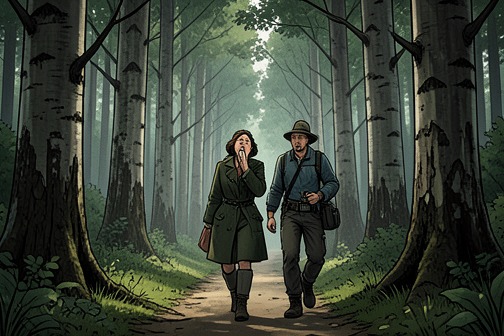
[Kathy, Ruth, and Tommy's stranded-boat trip](entity:event-recall-event-cf2872336a9c) brings the three former [Hailsham](entity:location-recall-location-hailsham-24972e3ee84f) students together on an outing that is at once a search for a particular place and a measure of how their relationships have changed. On the way to the [Stranded boat](entity:object-recall-object-07a477604b5e), [Ruth](entity:character-recall-character-ruth-5948dc08d1c1)’s weakening condition becomes impossible to overlook; helping her through the landscape draws [Kathy and Tommy](entity:relation-recall-relation-3b68ea15dbf8) into a shared act of care. The return journey offers a temporary ease, though the tension that follows prevents the outing from becoming a simple reconciliation.
## Setting Out from [Kingsfield](entity:location-recall-location-kingsfield-3623673e2d60)
About twenty minutes after leaving [Kingsfield recovery centre](entity:location-recall-location-kingsfield-recovery-9e69fef9b24a), [Kathy](entity:character-recall-character-kathy-cb914b1b0058) finds the turning and parks beside sycamores. A narrow, curving road has given way to the woods, where three paths force her to consult the directions. As she studies the handwriting, [Ruth and Tommy](entity:relation-recall-relation-a6b636f65e5e) wait behind her without speaking, almost as if they were children waiting to be told which way to go. The small pause places Kathy in the practical role of guide, while the trio’s silence recalls the uncertainties in their relationships.
The walk is manageable at first, but their bodies tell different stories. Ruth’s breathing grows increasingly laboured; [Tommy](entity:character-recall-character-tommy-6e67d140947b) walks without apparent difficulty, though he has a slight limp. They soon encounter a tilted, rusted barbed-wire fence, with the wire pulled out of shape. Ruth stops abruptly, distressed that the route requires them to get past it. Kathy reassures her that they can pass underneath if they hold the wire for one another, but Ruth remains still. The obstacle is modest, yet it turns the group’s unspoken tensions into a practical question of whether Ruth can rely on the others.
## The Fence and the Shift Toward Care
At the fence, Tommy appears to register Ruth’s frailty fully for the first time. Kathy recalls that he watches Ruth for several seconds; she can only infer what passes between them, but thinks both she and Tommy remember how they had joined against Ruth in the car. Their response is immediate and coordinated: Kathy takes one of Ruth’s arms, Tommy supports her elbow on the other side, and they gently guide her toward the wire. What had been a walk organized around Kathy’s directions becomes a moment in which Ruth’s needs direct both of them.
Kathy lets go to pass through the fence, then holds the wire up while Tommy and Ruth help Ruth through. The crossing proves less difficult than Ruth feared. With support on the other side, she gathers confidence and even helps hold the wire for Tommy, who passes without trouble. Her small contribution matters: she is not simply carried through the obstacle, and the group’s assistance becomes reciprocal. Later, Kathy recognizes that the distressing part of the earlier car exchange had not only been that she and Tommy had ganged up on Ruth, but that Ruth had accepted it without her old habit of striking back. Seeing Ruth’s uncertain walk and laboured breathing, Kathy puts an arm around her shoulders, telling herself that the gesture looks like carer work rather than sentimentality.
## The Marsh and the Stranded Boat
Beyond the trees, the landscape opens into marshland rather than a neat clearing. Patches of water reflect the pale sky; broken, dead tree trunks protrude from the ground, suggesting that the woods once extended farther. About sixty yards away, the boat sits beached beneath the weak sun. Ruth recognizes the scene from her friend’s description and finds it beautiful. The setting is open and quiet, but the route across it is not easy: as they approach, their shoes squelch and Kathy’s feet begin sinking beneath the tufts of grass. She calls a halt before they can get closer.
Tommy regrets that they cannot reach the boat and suggests they might return when the ground is drier. Ruth, glad to have seen it, says she wants to go back because the wind is chilly. The trip therefore reaches its destination without allowing the three to inspect the boat closely. Its importance lies less in possession or discovery than in the shared approach: they have made their way through the woods and marsh together, but the landscape sets a limit they cannot overcome on this visit.
## The Return and Its Unsettled Aftermath
The walk back to the car is freer than the outward journey. Ruth and Tommy compare their recovery centres, discussing ordinary matters such as food and towels, and repeatedly draw Kathy into the conversation by asking whether other centres are similar. Ruth’s walk is now steadier. At the fence, she barely hesitates when Kathy holds up the wire, a contrast to her earlier fear that underscores how much reassurance and company have changed her experience of the crossing.
Back in the car, with Tommy again in the rear seat, the three share what Kathy describes as a mostly comfortable atmosphere. In retrospect, however, she senses that something was being held back, though she admits that this impression may be shaped by what followed. On the long, nearly empty road, Ruth makes a casual remark about a roadside advertisement, and the exchange begins to echo the earlier conversation in the car. The trip’s temporary warmth thus remains real but fragile. Its central change is not a resolution of the trio’s history: it is the brief, visible return of mutual care, alongside Kathy’s renewed sense of closeness to Tommy and her recognition of Ruth’s physical decline.
Event 16
Ruth apologizes to Kathy and Tommy and gives them Madame’s address
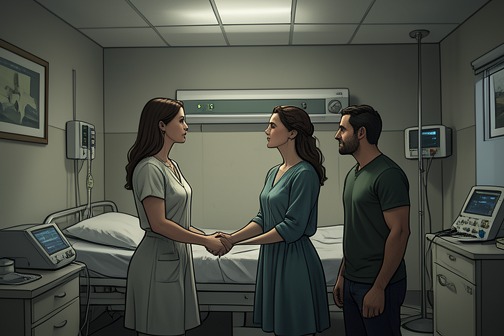
[Ruth](entity:character-recall-character-ruth-5948dc08d1c1)’s apology to [Kathy H.](entity:character-recall-character-kathy-h-54954f6c29c4) and [Tommy](entity:character-recall-character-tommy-6e67d140947b) is a reversal of the role she had long played between them: she admits that she knowingly kept them apart, then gives them [Madame](entity:character-recall-character-madame-e4b986404c22)’s address so they can try to obtain a deferral together. The event joins confession to practical action. Ruth cannot undo what she did, but she can name it, acknowledge the relationship she obstructed, and place a possible route forward in Tommy’s hands.
## Causes and Background
Ruth has arranged the trip because she wants to say what she has been carrying and give Kathy H. and Tommy something. The disclosure follows a charged moment: when Kathy H. mentions Madame, she sees triumph flash across Ruth’s face and realizes the subject has opened new ground between them. Kathy H. braces for an attack, expecting Ruth to regain the advantage she once held. Instead, Ruth asks for forgiveness, first acknowledging that she lied when Kathy H. spoke about her sexual urges. She says she had considered telling the truth but did not, although she understood Kathy H. might later blame her for the silence.
That admission is only the beginning. Ruth identifies her separation of Kathy H. and Tommy as the worst thing she did. She says she had recognized, for as long as she could remember, that the two of them should have been together, yet she kept them apart. Her confession therefore revises the meaning of their earlier history: the obstacle was not simply circumstance or misunderstanding, but Ruth’s repeated intervention. She does not ask them to absolve her for that harm. Instead, she asks them to put right what she has damaged.
## The Confession and the Address
Tommy asks what Ruth means by putting things right. His gentle, childlike puzzlement breaks through Kathy H.’s defenses and makes her sob. Ruth tells them that they should try to get a deferral as a couple, insisting that there is a real chance if the two of them apply together. Kathy H. rejects the suggestion as too late and shakes off Ruth’s hand when Ruth reaches to touch her shoulder. The exchange makes clear that remorse alone cannot restore the time Ruth took from them, and that Kathy H. is not ready to accept a promise of repair simply because Ruth now offers one.
Ruth has prepared more than an apology. She rummages in her anorak pockets and produces a crumpled piece of paper, telling Tommy to keep it for when Kathy H. changes her mind. He accepts it without understanding what it is. Ruth explains that it bears Madame’s address, connecting the paper to the possibility Tommy had discussed with her. She says finding it took a long time and involved risks, but that she obtained it for the two of them. The address turns regret into a specific opportunity: Ruth cannot secure a deferral herself, but she can put the means of approaching Madame into their hands.
Kathy H. has stopped sobbing by the time she starts the engine and insists that they end the conversation and get Tommy back. Ruth nevertheless asks them both to think about what she has said. The immediate result is not reconciliation neatly completed or a decision to pursue the deferral. It is a charged pause: Tommy has the address, Kathy H. remains resistant, and Ruth’s request is left with them after the trip ends.
## What the Event Changes
The apology changes Ruth’s position in the triangle. Earlier, she had exercised control by keeping Kathy H. and Tommy apart; here, she openly names that control as wrongdoing and asks them to choose one another. Her gesture is not only emotional. She has taken the trouble to find Madame, endured risks to obtain the address, and placed the next decision with the two people she once divided. The paper’s modest, crumpled form contrasts with the weight of the possibility attached to it.
The scene also exposes the limits of repair. Ruth can confess and offer help, but she cannot make Kathy H. forgive her or restore the years already lost. Kathy H.’s refusal to accept the suggestion immediately keeps the harm present even as Ruth tries to counter it. The event’s turn lies in this combination: the past is finally spoken plainly, while the future remains uncertain. The deferral is a possibility to pursue, not an outcome secured by the apology.
## Aftermath and Significance
Ruth’s concern for what follows continues after the trip. She asks Kathy H. whether she has considered becoming Tommy’s carer, an idea that gradually comes to stand in for the rest of the unfinished conversation. Kathy H. tells her she is thinking about it and that arranging such a change is not simple, while sensing that the question remains close to Ruth’s mind. This later wish extends the logic of the address: Ruth wants Kathy H. and Tommy brought together, not merely given a chance to seek a deferral.
Three days after Ruth’s second donation, Kathy H. is finally allowed to visit her in the early hours. Ruth is alone in a hospital room, in severe pain and largely inaccessible despite still being conscious. Kathy H. sits beside the metal bed, holds Ruth’s hand in both of hers, and stays as long as the staff permit. During a brief moment of lucidity, Kathy H. tells Ruth she will become Tommy’s carer as soon as she can. The promise answers the concern Ruth had voiced after the trip, making the confession part of a longer exchange of care rather than an isolated request for forgiveness.
As a remembered event narrated by Kathy H., the scene is shaped by the difference between what Ruth once withheld and what she can still give. Her confession cannot reverse the separation, and her address cannot guarantee a deferral; both acts matter because they acknowledge the truth and leave Kathy H. and Tommy with a choice. Ruth’s late gesture does not erase her betrayal. It changes what she does with the time and knowledge she has left.
Event 17
Ruth completes her second donation
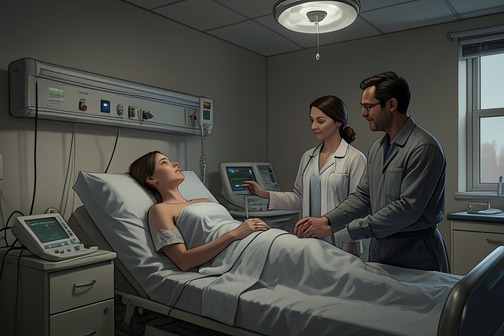
[Ruth](entity:character-recall-character-ruth-5948dc08d1c1)’s second donation leaves her gravely ill, and the hospital vigil that follows becomes a final exchange between Ruth and [Kathy H.](entity:character-recall-character-kathy-h-54954f6c29c4) Though Ruth can scarcely respond, a brief moment of recognition allows [Kathy](entity:character-recall-character-kathy-cb914b1b0058) to understand what Ruth wants: for Kathy to become [Tommy](entity:character-recall-character-tommy-6e67d140947b)’s carer. Kathy promises she will, turning a long-discussed possibility into a commitment made at Ruth’s bedside.
## Background and Stakes
In the period before Ruth’s second donation, [Kathy and Ruth](entity:relation-recall-relation-aa17f85e55fe) had returned to a fragile closeness. Their relationship remained strained by distrust and by the things they had left unsaid, but Ruth kept returning to the possibility of Kathy caring for Tommy. The idea gradually came to stand for the rest of their unresolved conversation. Kathy told Ruth that arranging such a change would not be simple; still, she understood that the question remained important to her friend.
The wish also gave the impending separation a practical consequence. Ruth was not simply asking Kathy to do something for Tommy: she was asking her to carry forward a connection among the three of them. By the time Kathy last saw Ruth, she recognized that this request was what Ruth would have wanted to say, even though Ruth was no longer able to speak.
## The Hospital Vigil
Kathy visits three days after Ruth’s second donation, in the small hours of the morning, after finally being allowed into her room. Ruth is alone in a hospital bed. The doctors, coordinator, and nurses behave in a way that makes Kathy understand they do not expect Ruth to survive. Although Ruth is technically conscious, she is inaccessible to Kathy for much of the visit, absorbed in managing the pain in her body.
Kathy pulls up a chair and holds Ruth’s hand in both of hers, squeezing it when pain makes Ruth twist away. She stays as long as the staff permit—three hours, perhaps longer. The vigil is therefore mostly one of physical presence rather than conversation: Kathy cannot draw Ruth back into an ordinary exchange, but remains beside her and responds to each visible wave of suffering.
## Ruth’s Last Recognition
For a few seconds, as Ruth twists in pain, she looks directly at Kathy and recognizes her. Kathy describes the moment as a brief island of lucidity amid the struggle of donation. Ruth says nothing, but Kathy reads her expression as a request to fulfill the plan they had discussed. She tells Ruth, under her breath, that she will become Tommy’s carer as soon as she can.
Kathy hopes Ruth can read the promise in her expression, just as Kathy has read Ruth’s. She cannot know for certain whether Ruth understood the words or the commitment behind them. Even so, Kathy later believes that Ruth may have known all along that Kathy would care for Tommy and that they would try to be together. The exchange remains an act of interpretation as well as care: Ruth’s unspoken look, Kathy’s promise, and the uncertainty about whether the message reached its recipient are inseparable.
## Consequences and Significance
The promise gives direction to what had previously remained a possibility. [Kathy becomes Tommy’s carer](entity:action-recall-action-d708372d48d9) almost a year after the trip to see the stranded boat, after his third donation. Her decision extends the care she has given Ruth into a new phase of her relationship with Tommy, as Ruth had hoped. The transfer is not presented as an easy resolution of the past; it is a practical response to Ruth’s request, made in the knowledge that their shared time is ending.
The scene brings Kathy’s professional skill and private attachment together. She knows how to stay with a donor in pain, when to offer comfort, and when presence must replace speech. Here that practiced care also becomes a personal promise. Ruth’s second donation thus marks both physical decline and a final act of connection: in the brief moment she can recognize Kathy, Ruth directs her toward the future she will not share with her friends.
Event 18
Kathy and Tommy begin a romantic relationship
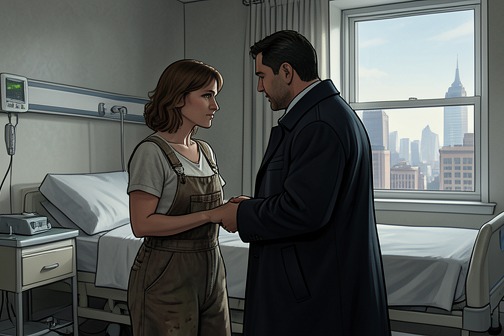
[Kathy H.](entity:character-recall-character-kathy-h-54954f6c29c4) and [Tommy](entity:character-recall-character-tommy-6e67d140947b) begin a romantic relationship at [Kingsfield](entity:location-recall-location-kingsfield-3623673e2d60), during his recovery from his third donation. Their reunion turns years of familiarity into a new form of intimacy, but it is shadowed from the outset by the late point in their lives at which they come together and by the demands of the donation system around them.
## Background and Reunion
[Kathy](entity:character-recall-character-kathy-cb914b1b0058)’s professional life as a carer had already become unusually long: at thirty-one, she had worked for more than eleven years and expected to reach almost twelve by the end of the year. For the final six years, she had been allowed to choose some of the donors she cared for. She preferred people from [Hailsham](entity:location-recall-location-hailsham-24972e3ee84f) and other places she knew, explaining that the deeper connection helped her sustain the work. Choosing donors from her past also gave her a way to become close again to [Ruth and Tommy](entity:relation-recall-relation-a6b636f65e5e) after years apart.
[Ruth](entity:character-recall-character-ruth-5948dc08d1c1)’s request helped bring [Kathy and Tommy](entity:relation-recall-relation-3b68ea15dbf8) back together. After Ruth’s second donation, Kathy sat beside her in the hospital and held her hand. In a brief moment when Ruth recognized her, Kathy said she would become Tommy’s carer as soon as she could. Kathy later understood that promise as part of what Ruth had been hoping for: that Kathy and Tommy would try to build a life together. Almost a year after their trip to see the stranded boat, Kathy became Tommy’s carer, shortly after his third donation.
## Life Together at Kingsfield
Tommy was recovering well but still needed rest, and the two settled into a quiet routine at Kingsfield. He had a large single room with a high, frosted window and a small school desk; Kathy visited after lunch, read to him from books including The Odyssey and One Thousand and One Nights, and completed her reports while he rested. Their conversations moved between their shared past and other subjects. The ease between them sometimes made the years seem to fall away, providing a gentle beginning to their relationship within the routines of recovery.
That closeness was not simply a return to how things had been before. Kathy and Tommy had known each other for years without becoming a couple, and now their relationship entered a new, more intimate phase. Kathy approached that change carefully, mindful that Tommy was still recovering and not wanting to pressure him. Their first step was tentative; in the days that followed, their relationship became more fully physical, and both were happy about it.
## Intimacy and the Sense of Lost Time
Even as their physical relationship developed, Kathy sensed sadness alongside their happiness. She understood it as regret that they had waited so long to become intimate. The feeling persisted rather than disappearing as they grew more comfortable together. Kathy tried to keep it at bay by concentrating on their closeness, but it remained present after moments of happiness, and they held each other tightly as though that might quiet it.
The setting sharpened the contrast between intimacy and loss. Light through the room’s high frosted window could make it feel as though autumn had arrived even in early summer, while sounds from donors moving around the grounds replaced the remembered world of students talking in a field. Tommy’s remarks about how his body had changed since his donations could bring their awareness of time and recovery back into the room. Their relationship offered a new closeness, but it could not restore the younger years in which that closeness had not existed.
## Care, Difference, and an Uncertain Future
Kathy’s role as Tommy’s carer made care both their daily setting and a source of strain. Later, when Tommy received notice of his fourth donation, they talked about how donors responded to that stage and about the uncertainty surrounding whether a donor would complete. Tommy raised the frightening possibility that donors might remain conscious after what was understood as completion, with further donations ahead and no carers or friends beside them. Kathy dismissed the possibility, but recognized that neither she nor the doctors could offer certainty; she regretted that they had retreated from the subject instead of talking it through.
Tommy also asked whether Kathy ever wished to receive her own notice and stop being a carer. His question exposed a difference between them that their closeness had not erased: the other people around them had become donors, while Kathy had continued in the caregiving role. His concern that she stood apart from donors, including him and Ruth, hurt her. Their relationship therefore begins not as an escape from their assigned lives, but within them: sustained by Kathy’s attentiveness and their shared past, yet pressed by bodily change, uncertain futures, and the unequal positions of carer and donor.
Event 19
Kathy and Tommy visit Madame and Miss Emily

[Kathy and Tommy visit Madame and Miss Emily](entity:event-recall-event-b49d8b94d50c) in [Littlehampton](entity:location-recall-location-littlehampton-b41b0ca29f0f) hoping to learn whether couples in love can defer their donations. The visit dismantles that hope: the deferral rumor was never true. But the conversation also exposes the purpose of [Hailsham](entity:location-recall-location-hailsham-24972e3ee84f)’s gallery and the political campaign behind the students’ cultivated education. A private appeal for more time becomes an account of what Hailsham tried to prove about the people it sheltered—and what even its advocates could not change.
## The Journey and the Encounter
[Kathy](entity:character-recall-character-kathy-cb914b1b0058) remembers that she and [Tommy](entity:character-recall-character-tommy-6e67d140947b) had imagined the visit as a test of nerve: standing before [Madame](entity:character-recall-character-madame-e4b986404c22)’s door, waiting with their hearts thumping, and trying to summon the courage to ring. The actual journey was difficult in less dramatic ways. Their car played up, making them an hour late for Tommy’s tests; a clinic mix-up then required him to repeat three of them. He felt woozy, became carsick on the way to Littlehampton, and needed several stops to walk it off. By the time they arrived, shortly before six, he was feeling better but had missed lunch. They parked behind the bingo hall and took from the boot a sports bag containing his notebooks.
As they walked towards the town centre, the closing shops and people gathering outside pubs made the visit feel less like the isolated confrontation they had anticipated. While they were looking for a takeaway sandwich, Tommy recognized Madame and grabbed Kathy’s arm. Kathy’s polite attempt to address her made Madame spin around. Her expression recalled the cold revulsion Kathy had felt years earlier when the students had waylaid her outside Hailsham’s main house. Madame seemed to identify what they were before she knew who they were; then, studying them in the setting sun, she put that visible revulsion aside.
Kathy introduced herself as [Kathy H.](entity:character-recall-character-kathy-h-54954f6c29c4) and identified Tommy as [Tommy D.](entity:character-recall-character-tommy-d-fcfbfd3c6e3e), reminding Madame that they had been students at Hailsham and had not come to cause trouble. Madame’s initial surprise turned into a small smile and a question about their purpose. Tommy raised the bag of notebooks and said they had brought things she might want for her gallery. His directness gave the encounter its central direction: they had not come merely to revisit a childhood institution, but to put their work and their hopes before the people associated with it.
## Asking About [Deferrals](entity:concept-recall-concept-deferrals-0fb486aebfef)
Kathy had spent weeks rehearsing what to say, mentally arranging key lines and transitions during long car journeys and quiet stops at service-station cafés. Once she faced Madame, the prepared argument seemed mostly wrong or unnecessary. Although Madame had once seemed like a hostile stranger from outside Hailsham, Kathy now felt an unexpected intimacy with her, as if she were closer to them than people they had met in recent years. That shift allowed Kathy to speak simply about the rumors: they had heard that Hailsham students in love might receive deferrals, but had come to suspect the stories might not be accurate and were not relying on them.
Kathy explained that they would not have come unless they were sure of their love. Madame challenged the certainty behind that claim, asking how they could know love was so simple. When [Miss Emily](entity:character-recall-character-miss-emily-50ca2bb99504) joined the discussion, Kathy asked directly whether the rumor was true. Miss Emily said that she had repeatedly stamped it out at Hailsham, but that it reappeared among former students. She had come to think that it was generated afresh wherever students carried the hope with them. Madame, she said, had long treated the rumor as something foolish students could be allowed to believe; Miss Emily had eventually become less concerned, reasoning that most would never test it.
For [Kathy and Tommy](entity:relation-recall-relation-3b68ea15dbf8), Miss Emily made clear, that comforting interpretation no longer applied. They were serious, had thought carefully, and had hoped carefully. She then gave them an unambiguous answer: there was no truth in the rumor and nothing she could do. Tommy asked whether deferrals might once have existed, before Hailsham closed. Miss Emily denied that too, specifying that the rumor had never been true, even before the [Morningdale scandal](entity:event-recall-event-b563f1199357) and during the period when Hailsham was regarded as a shining example of a more humane system. The possibility that had brought the couple to Littlehampton was not a lost privilege or a rule that had since changed; it had never been available.
## [The Gallery](entity:concept-recall-concept-the-gallery-5f6f3e9db14f) and the Purpose of Hailsham
The denial did not end their questions. Tommy asked why the guardians had taken the students’ artwork if the gallery did not exist. Miss Emily clarified that it had existed, and in a reduced form still did: she had kept part of the collection in the house, though there had not been room for everything. Kathy pressed beyond the existence of the collection to its purpose. If the students were destined to donate and die, why had they been given lessons, books, discussions, and sustained encouragement to make art?
Miss Emily answered by recalling Tommy’s own earlier suggestion to Madame: that the artwork revealed what students were like inside. He had not been far wrong. The gallery’s purpose had been to show their souls—to establish that they had souls at all. The notebooks Tommy carried therefore mattered in two ways. They were works he hoped Madame might want, but they also represented the kind of evidence Hailsham had once put before the outside world in an effort to make its students’ humanity visible.
Miss Emily placed that effort in its historical context. When she and Madame began, Hailsham and [Glenmorgan House](entity:location-recall-location-glenmorgan-house-355a2dfea1f2) were among the first places of their kind; the [Saunders Trust](entity:organization-recall-organization-saunders-trust-d3d7b26becef) followed some years later. Together these institutions formed a small but vocal movement that challenged the way the donation programme was run. They argued that students raised in humane, cultivated surroundings could become as sensitive and intelligent as ordinary people. Before that campaign, she said, clones were regarded by much of society as shadowy objects in test tubes, existing to serve medical science.
At the height of Hailsham’s influence in the late 1970s, the movement organized large events around the country. Cabinet ministers, bishops, and other prominent people attended exhibitions; speeches were made and substantial funds pledged. The students’ artwork served as public evidence against the claim that they were less than fully human. Miss Emily recalled those years with a gentle smile, though Kathy and Tommy could not follow the names and histories of the people she mentioned. The visit thus connects the personal history of their education to a public campaign whose achievements were real but limited: it could support humane treatment and recognition, but it could not secure the deferral the couple sought.
## Consequences and Significance
The decisive change in the visit is not simply that Kathy and Tommy receive a refusal. They learn that the hope shaping their appeal was never a rule hidden in Hailsham’s past. Miss Emily’s explanation also alters the meaning of the artwork they had been encouraged to produce. It was not just a school exercise or a private measure of talent: the adults selected and exhibited it in an effort to make the students’ inner lives legible to a society that questioned their humanity.
The meeting brings those two truths into the same room. Hailsham’s advocates could argue for the students, create cultivated surroundings, and gather public support; they could not grant the couple more time. Kathy and Tommy come with art in a bag and a carefully considered appeal, but leave the conversation facing the limits of what that art and that campaign could achieve. The gallery’s history gives their education a political purpose, while the false rumor marks the boundary of its power.
Event 20
Morningdale scandal
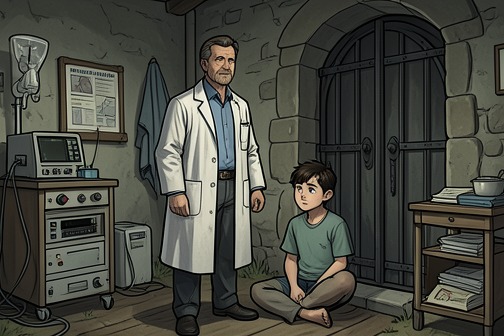
The [Morningdale scandal](entity:event-recall-event-b563f1199357) was the exposure of James Morningdale’s attempt to develop children with enhanced characteristics, a project that crossed legal boundaries and was shut down. Its importance in the history of [Hailsham](entity:location-recall-location-hailsham-24972e3ee84f) lay less in its scale as a public event than in the fear it rekindled: the prospect of created children not merely serving the donation programme but taking their place in society. In [Miss Emily](entity:character-recall-character-miss-emily-50ca2bb99504)’s account, that reaction helped turn public opinion against the fragile movement that had sought better lives for students like [Kathy H.](entity:character-recall-character-kathy-h-54954f6c29c4) and [Tommy](entity:character-recall-character-tommy-6e67d140947b).
## The research and its discovery
Miss Emily describes James Morningdale as a talented scientist who conducted his work in a remote part of Scotland, apparently hoping to attract less attention. His aim was to offer people children with enhanced traits, including superior intelligence and athleticism. Other researchers had pursued similar ambitions, she says, but Morningdale had taken the work further than anyone before him and gone far beyond legal boundaries. He was discovered, his work was stopped, and at first the affair appeared to be over.
The account supplies no detailed chronology of Morningdale’s research or of how it was uncovered. Its significance emerges instead from the distinction Miss Emily draws between the immediate event and the atmosphere it produced. The scandal did not become an enormous matter in the wider world; nevertheless, it revived a fear that was already present. Its consequences for Hailsham’s cause therefore exceeded the public prominence of the incident itself.
## A boundary between donation and social belonging
The scandal sharpened a distinction on which the donation system depended. Society had accepted the creation of students for organ donation, while the possibility of created children growing up to claim a place alongside other people provoked a different and much stronger recoil. Miss Emily stresses that the prospect of children made demonstrably superior to ordinary people frightened the public. The scandal thus exposed a limit to the tolerance Hailsham’s advocates had been trying to secure: improved treatment for students could be supported so long as it did not challenge the established division between them and the wider population.
That division had formed against a longer postwar history. Miss Emily traces the system to the scientific breakthroughs of the early 1950s, when new ways to treat previously incurable conditions arrived so rapidly that the public did not pause to consider the questions they raised. People wanted the cures and preferred to believe that the organs came from nowhere, or were grown in a vacuum. By the time public attention turned to the students themselves—to how they were raised and whether they should have been brought into existence—the barrier against seeing them as fully human had already been built. Hailsham’s campaign tried to make that humanity visible through the students’ lives and work, but Morningdale’s project made the prospect of created people entering ordinary society seem threatening rather than humane.
## Political consequences for Hailsham
Miss Emily places the scandal among several causes of the movement’s collapse, not as its sole explanation. She recalls that Hailsham had once enjoyed substantial support: at the height of its influence in the 1970s, its advocates organized events around the country attended by cabinet ministers, bishops, and other prominent people. They raised funds and displayed students’ art to argue that the children were fully human. Even in that period, however, the campaign was a difficult one, and its progress depended on the support of people and institutions with influence.
After Morningdale, the political climate changed. Miss Emily also mentions other damaging developments, including an awful television series, and acknowledges that she and her colleagues may have been too absorbed in their own work to recognize the danger early enough. Miss Claude disagreed that the movement could have prevented its defeat, suggesting the reversal might have happened whatever they did. Miss Emily’s own conclusion is that the scandal exposed the movement’s central weakness: it was too fragile and too dependent on whether corporations and politicians found it advantageous to offer support. Once that support became costly, the advocates could not keep the campaign afloat.
The sponsors disappeared one after another over a little more than a year. Hailsham continued for two years longer than [Glenmorgan House](entity:location-recall-location-glenmorgan-house-355a2dfea1f2), but it too was eventually forced to close. Miss Emily describes the wider retreat as a wish to push the students back into the shadows, away from public attention and from questions about how the donation programme worked. The scandal contributed to that retreat by renewing fears about created children, while the loss of sponsors converted a change in public feeling into the practical collapse of the institutions that had offered students better conditions.
## Retrospective significance
Miss Emily’s recollection gives the scandal a double significance. It was a failed research project that authorities stopped, but its wider effect was not confined to the laboratory or to the legality of the work. The public fear it revived helped make it harder to sustain the idea that students could be recognized as human beings without unsettling the social order built around their donations. In this account, the same society that had accepted created children as a source of organs recoiled at the prospect of created children entering society as competitors or equals.
The Morningdale scandal consequently marks a reversal in the fortunes of Hailsham’s reform effort: after years in which its work attracted influential allies, the changed climate left the movement without the backing on which it relied. Miss Emily does not claim that the scandal alone closed Hailsham, and her acknowledgment of other pressures and of Miss Claude’s disagreement keeps the explanation from becoming a simple chain of cause and effect. Its decisive role is as a catalyst and a reminder of the limits of public sympathy. Once created children were imagined as a possible challenge to ordinary society, the campaign for their humane treatment lost the support that had made Hailsham possible.
Event 21
Tommy’s outburst in the field
[Tommy’s outburst in the field](entity:event-recall-event-377ffdfa653d) is a sudden, bodily eruption of distress that [Kathy](entity:character-recall-character-kathy-cb914b1b0058) remembers as both frightening and intimate. After a quiet drive at night, [Tommy](entity:character-recall-character-tommy-6e67d140947b) asks her to stop and goes alone into the dark; his screams lead Kathy through a ditch and over a fence to a muddy field, where she finds him raging. She holds on until the struggle ebbs, and the two stand embracing before walking back to the car. The scene’s force lies in that turn: Tommy’s fury first isolates him, then gives way to a closeness neither of them explains in words.
## Background and Approach
Before the outburst, Tommy tells Kathy, “I think [Miss Lucy](entity:character-recall-character-miss-lucy-f91328e8593e) was right. Not [Miss Emily](entity:character-recall-character-miss-emily-50ca2bb99504).” Kathy cannot remember whether she answers. She does remember noticing something in his voice or manner that sets off “distant alarm bells,” though Tommy sits quietly and gazes straight ahead. The recollection thus marks a change in him before any visible loss of control: the alarm is an impression Kathy registers, not an explanation of what is about to happen.
A few minutes later, Tommy asks, “Kath, can we stop? I’m sorry, I need to get out a minute.” Kathy thinks he is feeling sick again and pulls over almost immediately, hard against a hedge. The spot is unlit, the road curves, and she worries that another vehicle could come around and hit the car. Tommy’s purposeful manner also suggests to her that he would rather cope alone, even if he is ill. She stays in the car, considering whether to move it farther up the hill, while he disappears into the darkness.
## The Outburst
The first scream initially sounds to Kathy as though it might come from a stranger lurking in the bushes. By the second and third, she knows it is Tommy. She gets out and tries to follow the sound, but an impenetrable thicket blocks her way. Finding an opening, she steps through a ditch, climbs over a fence, and lands in soft mud. The search is urgent but difficult: in the darkness she cannot see where Tommy is, and the terrain physically delays her as she tries to reach him.
Beyond the fence, the landscape comes into view. The field slopes steeply ahead, with village lights far below in the valley. A powerful gust pulls at Kathy strongly enough that she must reach for a fence post. In the moonlight, she makes out Tommy in the middle distance, near the start of the slope, shouting, flinging his fists, and kicking. His rage is visible as uncontrolled movement rather than an argument with Kathy; the scene supplies no stated cause that would settle why he has stopped or what has provoked this precise outburst.
## Contact and Change
Kathy runs toward Tommy, but the mud sucks at her feet and impedes him as well. He slips and drops out of view after kicking out, though his disjointed swear-words continue. Kathy reaches him as he is getting back to his feet. She glimpses his face, caked in mud and distorted with fury, then takes hold of his flailing arms. He tries to shake her off, but she keeps her grip until he stops shouting and she feels the fight leave him.
The physical struggle changes into an embrace without a spoken explanation. Kathy realizes that Tommy has his arms around her too. They remain together at the top of the field for what feels to her like a long time, saying nothing as the wind tugs at their clothes. The image of holding one another against the wind gives the encounter its emotional shape: the same contact that initially restrains Tommy becomes mutual support, and his isolation gives way to a shared stillness. The scene presents closeness through bodies and action, not through a conversation that interprets the outburst.
## Aftermath and Significance
When they finally separate, Tommy mutters, “I’m really sorry, Kath.” He gives a shaky laugh and adds, “Good job there weren’t cows in the field. They’d have got a fright.” Kathy can see that he is trying to reassure her that everything is all right, although his chest is still heaving and his legs are shaking. They walk together back toward the car, careful not to slip. His apology and joke signal an effort to return to ordinary exchange, while his physical agitation shows that the episode has not simply vanished.
Kathy ends the immediate encounter with a teasing observation: “You stink of cow poo,” she tells him. The detail brings the muddy, undignified reality of the field into their conversation and answers his attempt at humor with one of her own. It does not explain the outburst or erase the fear of hearing his screams in the dark. Instead, the scene moves from alarm, through forceful contact, to a small, familiar exchange. Remembered by Kathy, it makes the change in Tommy legible through what she witnesses and what she does: she cannot name his distress for him, but she reaches him, holds him, and walks back with him.
Event 22
Kathy ends her tenure as Tommy’s carer
[Kathy ends her tenure as Tommy’s carer](entity:event-recall-event-cd396a0cfdfc) when he asks her to find a replacement as his fourth donation approaches. The decision tests the boundary between professional care and private love: [Kathy](entity:character-recall-character-kathy-cb914b1b0058) has returned to [Tommy](entity:character-recall-character-tommy-6e67d140947b) partly to care for him, but Tommy believes that facing the final stage of donation may require a carer who is not also his closest companion. Their parting is negotiated rather than imposed by a quarrel, and its quietness gives their last visits the character of a deliberate goodbye.
## Background and renewed care
By the time [Kathy becomes Tommy’s carer](entity:action-recall-action-d708372d48d9), she has worked in the role for more than eleven years and expects to continue until the end of the year, making her service almost exactly twelve years. She takes pride in helping donors recover and in recognizing when to comfort them, leave them alone, listen, or encourage them to move on. The work is emotionally demanding, however, and she acknowledges that carers have limited patience and energy. The chance to choose donors, which she has had only during the last six years of her career, lets her reconnect with people from her past.
Kathy had chosen [Ruth](entity:character-recall-character-ruth-5948dc08d1c1) at a recovery centre in Dover, where their shared upbringing at [Hailsham](entity:location-recall-location-hailsham-24972e3ee84f) made their old disagreements seem less important beside the memories no one else could share. Later, Ruth urged Kathy to become Tommy’s carer. On Ruth’s final visit, after her second donation, Kathy sat beside her and held her hand; during a brief moment when Ruth recognized her, Kathy promised she would take care of Tommy. That promise shaped the meaning of the role before Tommy asked her to relinquish it.
## Tommy’s request and their disagreement
The immediate conflict takes place at [Kingsfield](entity:location-recall-location-kingsfield-3623673e2d60), where Tommy asks Kathy for a different carer. His fourth donation is nearing, and he points to recent kidney trouble as a sign that more difficult experiences lie ahead. He says the request is not only about the approaching donation. He also does not want Kathy to see him through everything that may come, and distinguishes this need from Ruth’s wish that [Kathy and Tommy](entity:relation-recall-relation-3b68ea15dbf8) should be together.
Kathy answers that helping him through this stage is precisely why she came back, and insists that she is the person who should care for him. Tommy counters that Ruth would have understood his wish to handle the last part differently because Ruth had been a donor herself. His appeal to their different experiences wounds Kathy: she feels that he has again placed a divide between her and the donors, including himself and Ruth. She walks away, but the disagreement does not become a major fight. When Tommy follows her to his room, they cool down, make peace, and begin discussing how to arrange the change.
The dispute is connected to their unspoken fear about what a fourth donation means. Tommy has described how donors are treated with special respect when they reach that stage, while wondering whether anyone can know for certain that a donor will complete. Kathy dismisses the speculation rather than discussing it with him. In retrospect, she recognizes that Tommy had been raising questions for which neither carers nor medical staff had certain answers. His request for another carer thus comes amid an approaching transition whose outcome remains uncertain, not simply from dissatisfaction with Kathy’s care.
## Agreement and final visits
After they reconcile, Tommy asks whether Kathy ever tires of being a carer and wishes that she would receive her own notice. She says that she does not mind and that good carers matter. Tommy accepts that she is a good carer, but says she would be the perfect one for him if she were not herself. He imagines two people struggling to stay together in a powerful current, then being forced apart. The image gives their practical disagreement a larger emotional shape: affection does not remove the limits imposed by their circumstances.
Kathy apologizes for losing her temper and agrees to speak to the people responsible for arranging a replacement, trying to ensure that Tommy gets someone good. The weeks before the new carer takes over prove unexpectedly tranquil. Although other donors in North Wales keep Kathy away from Kingsfield more than she wants, she still visits Tommy three or four times a week. They spend time talking, and Tommy listens while she reads; sometimes he works in his notebook on new animal ideas. The weather grows colder but remains dry and often sunny. Their closeness continues, but the visits are no longer organized around resolving the disagreement. The remaining time passes without another major confrontation.
## Farewell and significance
Kathy’s last visit comes on a crisp December afternoon, just after one o’clock. She half-expects some visible change in Tommy’s room, but everything appears as usual. Neither has a pressing subject left to discuss, and both seem reluctant to begin a conversation they cannot finish properly. When they leave, Tommy walks down the stairs with her, which he does not usually do, and crosses the Square with her toward her car. The sun is already setting behind the buildings.
At the car, Tommy recalls a private childhood habit from playing football at Hailsham: after scoring, he imagined that he was running through shallow water as he returned to his friends. He had never told anyone about it. The memory brings a final piece of their shared past into the farewell, not as an explanation for the separation but as something intimate he chooses to entrust to Kathy. They share a small kiss. Kathy drives away while Tommy remains standing there, waving before turning toward the covered walkway. In the rear-view mirror, the Square disappears from view.
The end of Kathy’s tenure is both a transfer of practical responsibility and a separation between people who have loved one another throughout their lives. Tommy’s request protects a boundary he needs as he faces further donations; Kathy’s agreement honors his choice even though she had returned to care for him. Her later insistence that her memories of [Ruth and Tommy](entity:relation-recall-relation-a6b636f65e5e) will not fade sets the farewell against the losses that define her life. The carer’s work ends, but the remembered gestures—the notebook, the football story, the small kiss, and Tommy’s wave—remain with her.
Event 23
Tommy completes his donations
[Tommy completes his donations](entity:event-recall-event-e49151e5ce4f) outside the narrated scene, leaving [Kathy](entity:character-recall-character-kathy-cb914b1b0058) to register his loss through what she remembers and the places she revisits. The event’s significance lies as much in its uncertainty as in its finality: even as [Tommy](entity:character-recall-character-tommy-6e67d140947b) and Kathy discuss the fourth donation, they cannot know what follows completion, and Kathy later imagines—but does not allow herself to believe—that he might return.
## The Fourth Donation and Its Uncertainties
About a week after the notice arrived for Tommy’s fourth donation, he and Kathy discussed what that stage meant. Organ donors could respond to a fourth donation by talking about it endlessly, joking about it, or refusing to discuss it. At the same time, reaching a fourth donation could bring a donor unusual respect: other donors, doctors, and nurses treated it as an occasion worthy of congratulations. That public recognition did not resolve the private uncertainty surrounding what came next.
Tommy told Kathy that people worried so much about the fourth because they could not be certain they would complete; certainty, he thought, would make it easier. Kathy dismissed the speculation as wild talk, but knew she had no evidence for doing so. Their conversation approached a fear neither could settle: that a donor might remain conscious after technically completing, face further donations without a recovery centre, carer, or friends, and be left to wait until being switched off. Kathy describes this possibility as horror-story talk, usually avoided by donors and those around them. She was glad Tommy had confided the fear to her, yet they both drew back from it rather than continuing the conversation.
## [Completion](entity:state-recall-state-completion-350944ef1bbc) Outside the Scene
The novel does not narrate Tommy’s completion directly. Instead, Kathy refers to hearing that he had completed, and later recalls that she lost him. The absence of a final scene gives no account of where the completion took place or what Tommy experienced at the end. His fate reaches the reader through Kathy’s retrospective knowledge, not through a description of his last moments.
That gap is sharpened by the fear the couple had already left unexamined. Their conversation had raised the possibility of further donations beyond the point called completion, but Kathy offers no confirmation that this happened to Tommy. The event is final for her, while the procedure’s full boundary remains uncertain in the account she can give.
## Kathy’s Return to [Norfolk](entity:location-recall-location-norfolk-cb7f812776bb)
A couple of weeks after hearing that Tommy had completed, Kathy drove to Norfolk without a particular destination or purpose. She did not go as far as the coast. For about half an hour she followed unfamiliar roads without caring where she was, passing flat fields beneath broad grey skies until she stopped near a small cluster of trees beside a ploughed field.
A fence with two lines of barbed wire kept her from the earth beyond it. Windblown rubbish had caught along the wire, while torn plastic and carrier bags flapped among the branches. Looking at this debris, Kathy imagined that everything she had lost since childhood had washed up there. In her private fantasy, Tommy would appear as a tiny figure on the horizon, grow nearer, and wave or call to her. She did not let the vision develop beyond that possibility. Tears came, but she remained composed, waited briefly, and then returned to her car.
## Loss, Memory, and What Remains
Kathy’s imagined return of Tommy is explicitly bounded: she waits, but does not mistake the fantasy for an event. The Norfolk rubbish gathers the image of accumulated losses into a single place, while the absent figure on the far side of the field gives her grief a shape without undoing his completion. Her drive is not a search for a particular object or answer; it is a brief encounter with the possibility of seeing what has been lost gathered before her.
Kathy rejects the idea that her most precious memories will fade quickly. She says she lost [Ruth](entity:character-recall-character-ruth-5948dc08d1c1) and then Tommy, but does not expect to lose her memories of them. She also carries [Hailsham](entity:location-recall-location-hailsham-24972e3ee84f) in memory after its closure, without trying to find what has become of the place. As her time as a carer approaches its end, she expects a quieter life at whichever centre she is sent to, with the remembered people and school preserved in her mind. Tommy’s completion thus marks an irreversible loss, but not the disappearance of his place in Kathy’s account of the past.